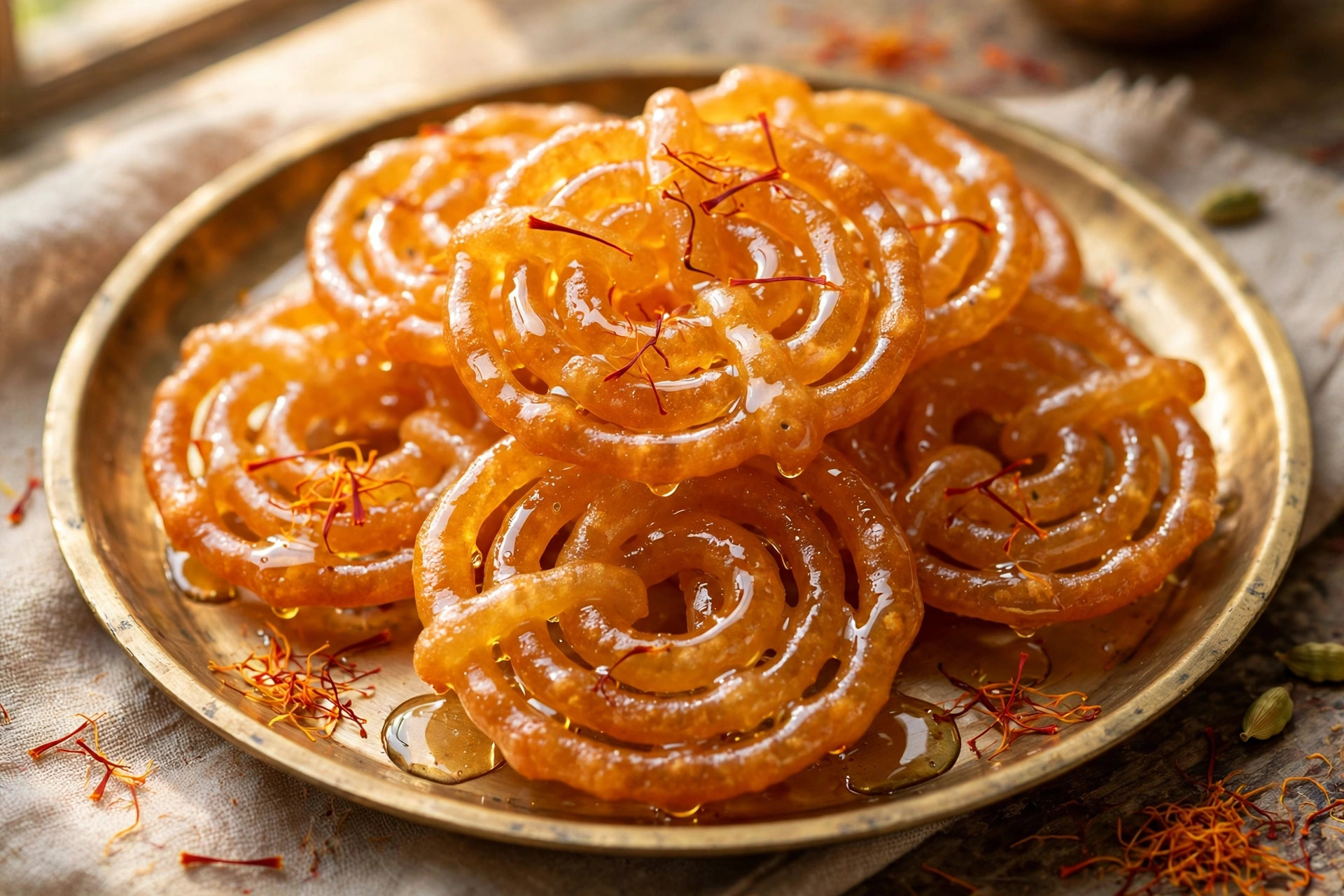
Jalebi is an Indian sweet made from fermented maida batter piped into hot oil in swirling coils, fried until crisp, then soaked in warm saffron sugar syrup. The jalebis turn golden and juicy, crisp outside and syrupy inside. This recipe shows you how to make them at home in about 40 minutes, plus resting time.
Ingredients
These quantities make about 20 jalebis and serve 4 people as a dessert. Rest the batter for at least 2 hours so it ferments lightly.
- 1 cup maida (all-purpose flour)
- 1 tablespoon cornflour
- 1/4 teaspoon baking soda
- 1/2 cup curd, whisked smooth
- 1/2 cup warm water, plus more as needed
- 1/4 teaspoon yellow food colour (optional)
- Ghee or oil, for deep frying
For the syrup:
- 1 1/2 cups sugar
- 1 cup water
- 1/2 teaspoon cardamom powder
- 1/4 teaspoon saffron strands, soaked in 1 tablespoon warm milk
- 1 teaspoon lemon juice
- 1 teaspoon rose water (optional)
Step-by-Step Method
Make the batter first. Put the maida and cornflour in a bowl, add the baking soda, and whisk once. Add the curd and warm water a little at a time, whisking until the batter turns smooth and free of lumps. It should fall from a spoon in a thick, flowing ribbon.
Cover the bowl and rest the batter in a warm place for 2 hours. The batter ferments lightly and turns slightly bubbly on the surface. This light ferment gives them their crisp texture and mild tang.
Make the sugar syrup while the batter rests. Put the sugar and water in a wide pan on medium heat. Stir until the sugar melts, then cook for 5 to 6 minutes until the syrup turns sticky and coats the back of a spoon. It should reach a one-string stage.
Stir the cardamom powder, saffron milk, lemon juice and rose water into the syrup. Keep the syrup warm on very low heat while you fry the jalebis. Warm syrup soaks into the coils fast, while cold syrup leaves them dry.
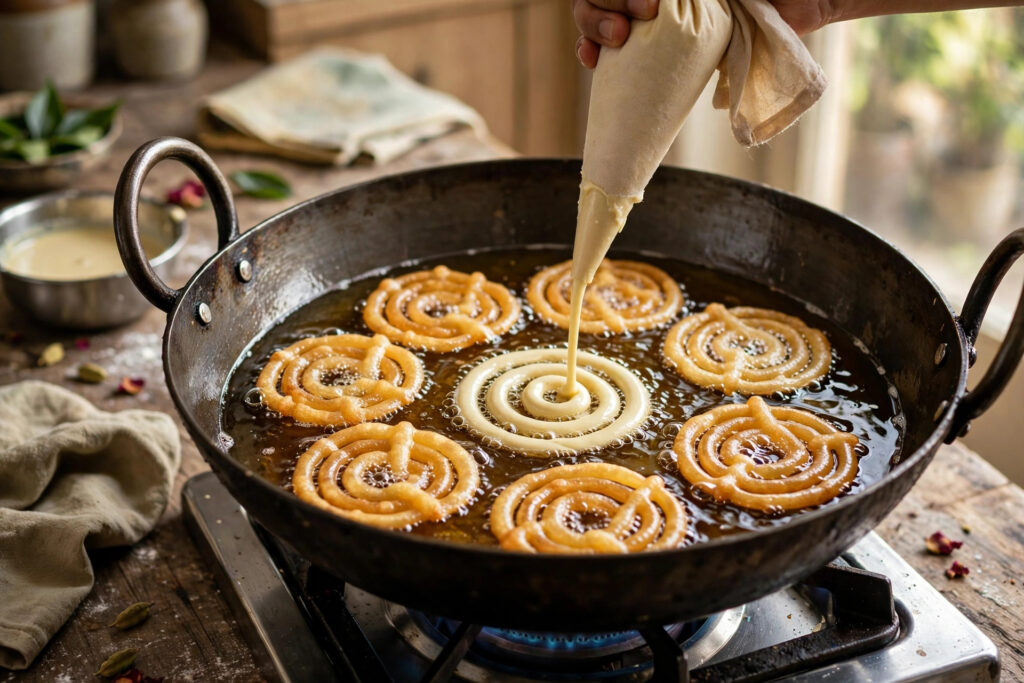
Pour the batter into a piping bag or a squeeze bottle with a small nozzle. Heat ghee or oil in a wide, flat kadhai on medium heat. Pipe the batter into the hot oil in tight coils, starting from the centre and moving outward. Fry 3 to 4 jalebis at a time.
Fry each coil for 2 to 3 minutes, turning once, until it turns crisp and golden on both sides. Lift it out with a slotted spoon, drain for a few seconds, and drop it straight into the warm syrup. Soak for 30 seconds, then lift out and serve warm.
Cooking Time & Servings
Preparation takes about 10 minutes, plus 2 hours of resting for the batter. Cooking takes about 30 minutes, including the syrup and frying. The total active time is 40 minutes, not counting the batter rest.
This recipe makes about 20 jalebis and serves 4 people. Serve five pieces per person, warm, with a spoonful of syrup on top. They taste best fresh, so fry them just before serving.
If you are cooking for two, halve all the ingredients and make 10 pieces. For a larger group of eight, double the quantities and fry them in small batches so the oil stays hot.
Practical Tips
Keep the syrup warm, not hot, while frying. Very hot syrup makes the jalebis soft and limp, while cold syrup will not soak in. Warm syrup on very low heat gives crisp coils with a juicy, syrupy centre.
Pipe the coils close together so each coil holds its shape. Loose, wide coils break apart in the oil and fry unevenly. Pipe tight spirals from the centre outward, and keep the nozzle close to the oil surface.
Check the syrup with the one-string test. Take a drop of syrup between your thumb and finger and pull them apart. If a single thin string forms, the syrup is ready. Thin syrup leaves them dry, and thick syrup turns them sticky.
Common Mistakes
Skipping the batter rest is the most common mistake. Unrested batter gives flat, soft coils with no crispness. Rest the batter for at least 2 hours in a warm place so it ferments lightly.
Frying on high heat is another frequent error. High heat browns the jalebis fast while the inside stays raw and doughy. Fry on medium heat for 2 to 3 minutes so they turn crisp all the way through.
Soaking them too long makes them soggy. Thirty seconds in warm syrup is enough for a juicy centre with a crisp edge. Lift them out with a slotted spoon and let the extra syrup drip off.
Variations
For a saffron version, add a pinch more saffron to the syrup and a drop of yellow food colour to the batter. They turn a deep golden colour with a rich saffron flavour. Serve them warm with a spoonful of syrup.
For a rabri pairing, serve the warm coils on a bed of chilled rabri. The hot, crisp coil against the cool, creamy rabri is a classic festive pairing. Make the rabri ahead and chill it for 2 hours.
For a mawa version, replace half the maida with 1/2 cup of crumbled mawa (khoya) and reduce the curd to 1/4 cup. They turn softer and richer. Serve them with our gulab jamun recipe for a dessert spread, or try our rasgulla for a festive sweet.
Storage
Jalebis taste best fresh and warm from the syrup. If you have leftovers, let them cool completely, then store them in an airtight container at room temperature for up to 1 day. The crispness fades, but the flavour stays good.
Reheat them in a hot oven at 180°C for 3 to 4 minutes until crisp again, then dip them briefly in warm syrup. Store the syrup separately in the fridge for up to 1 week, and warm it gently before use.
Frequently Asked Questions
Why are my jalebis soft instead of crisp?
Soft coils usually come from a short batter rest or syrup that is too hot. Rest the batter for 2 hours, fry on medium heat, and soak them in warm syrup for only 30 seconds.
Can I make them without a piping bag?
Yes, pour the batter into a clean squeeze bottle, a zip-lock bag with a small corner cut off, or a cloth with a tiny hole. Pipe tight coils into the hot oil the same way, starting from the centre.
How do I know the sugar syrup is ready?
Cook the syrup for 5 to 6 minutes until it turns sticky and coats the back of a spoon. Take a drop between your thumb and finger; if one thin string forms when you pull them apart, the syrup is ready.
What goes well alongside?
Jalebi pairs well with rabri, curd or a cup of masala chai. Serve it with our kheer and gajar ka halwa for a dessert spread. Learn more about the dish on Wikipedia’s page on this sweet and see more Indian sweets in the BBC Good Food Indian recipes collection.
For more recipes, visit our About Us page, or try our rasmalai recipe for another festive dessert.
Leave a Reply