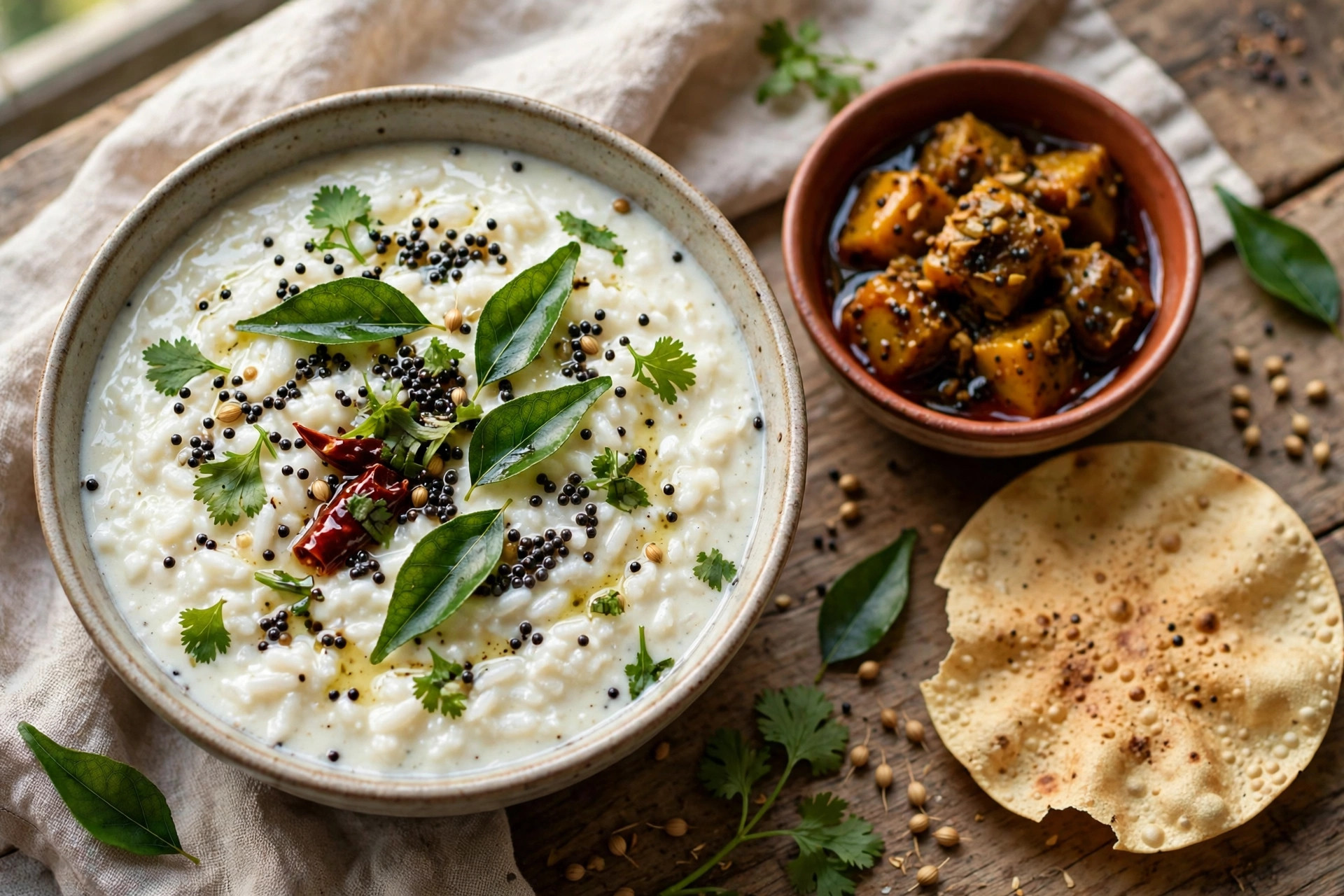
Curd rice is a South Indian comfort dish made from soft-cooked rice mixed with whisked curd, salt and a crackling tempering of mustard seeds, curry leaves and dried red chilli. The rice turns cool, creamy and mildly tangy. This recipe shows you how to make it at home in about 25 minutes.
Ingredients
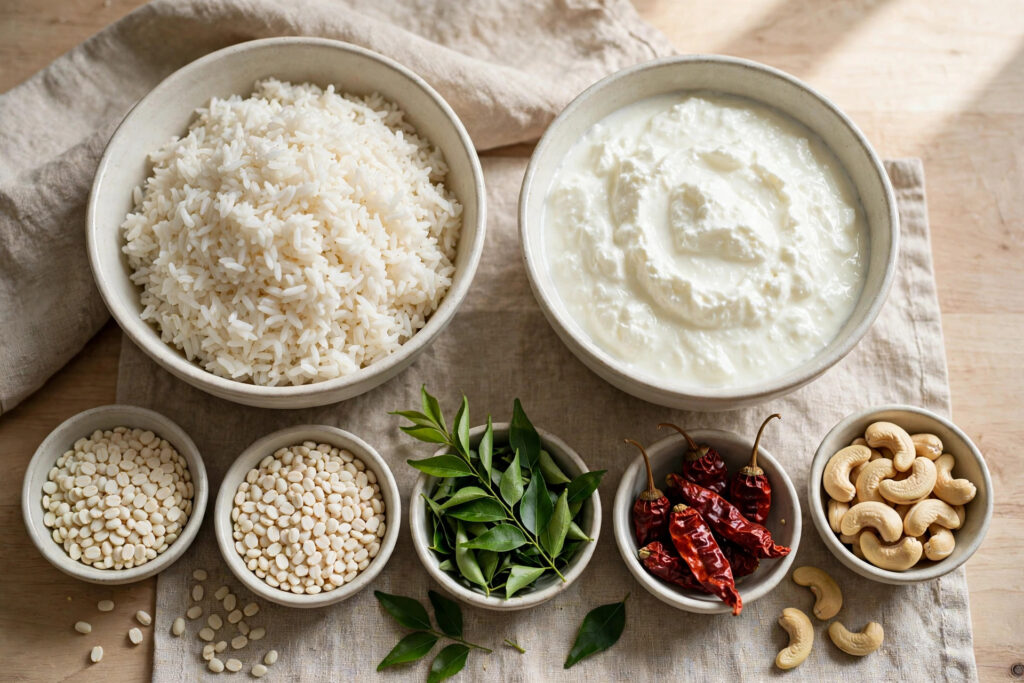
These quantities serve four people as a light meal or side dish. Cook the rice a little softer than usual so it blends well with the curd.
- 1 cup raw rice (any short-grain variety)
- 3 cups water
- 1 1/2 cups thick curd, whisked smooth
- 1/2 cup milk (optional, for a creamier texture)
- 1 teaspoon salt, or to taste
- 1 tablespoon chopped coriander leaves
For the tempering:
- 1 tablespoon oil or ghee
- 1 teaspoon mustard seeds
- 1 teaspoon urad dal
- 1 teaspoon chana dal
- 1 dried red chilli, broken into pieces
- 8 to 10 curry leaves
- 1/4 teaspoon asafoetida (hing)
- 1 tablespoon cashew nuts, broken (optional)
- 1 green chilli, finely chopped (optional)
- 1 tablespoon grated ginger (optional)
Step-by-Step Method
Rinse the rice in a bowl, changing the water 2 to 3 times until it runs mostly clear. Put the rice in a pressure cooker with 3 cups of water. Cook on medium heat for 3 to 4 whistles, about 15 minutes, so the rice turns soft and slightly mushy.
Let the pressure release naturally for 10 minutes, then open the lid. Mash the hot rice lightly with the back of a spoon until it turns soft and creamy. Let the rice cool for 10 minutes so it does not curdle the curd.
Whisk the curd in a bowl until it turns smooth. Add the milk if you like a creamier texture. Stir the curd and salt into the cooled rice and mix well until the rice turns creamy and evenly coated.
Make the tempering in a small pan. Heat the oil on medium heat, add the mustard seeds and let them splutter. Add the urad dal and chana dal, and cook for 30 seconds until they turn light golden.
Add the dried red chilli, curry leaves, asafoetida and cashew nuts to the pan. Cook for 20 seconds until fragrant, then add the green chilli and ginger if you are using them. Switch off the heat at once so the tempering does not burn.
Pour the hot tempering over the rice and mix well. Stir in the chopped coriander leaves. Let the curd rice rest for 10 minutes so the flavours blend, then serve it cool or at room temperature.
Cooking Time & Servings
Preparation takes about 5 minutes, and cooking the rice takes about 15 minutes. Cooling and mixing take 10 minutes more. The total time is 25 minutes, not counting the 10-minute rest at the end.
This recipe serves 4 people as a light meal or a side dish. Serve one generous bowl per person, with pickle and a vegetable side on the side. Curd rice also works well as a lunchbox dish.
If you are cooking for two, halve all the ingredients and cook 1/2 cup of rice. For a larger group of eight, double the quantities and mix the curd in a wide bowl so the rice coats evenly.
Practical Tips
Cool the rice before adding the curd. Hot rice curdles the curd and makes the dish grainy and sour. Let the rice cool for 10 minutes, until it feels just warm to the touch.
Use fresh, mildly sour curd for the best taste. Very sour curd makes the rice sharp, while fresh curd gives a mild, creamy tang. Whisk the curd until smooth before mixing it into the rice.
Add the tempering while it is still hot. Hot oil carries the mustard, curry leaf and asafoetida flavours into the rice. Pour it over the curd rice and mix at once so the aroma spreads evenly.
Common Mistakes
Using firm, separate rice grains is the most common mistake. Curd rice needs soft, slightly mushy rice that blends with the curd. Cook the rice with extra water and mash it lightly before mixing.
Adding the curd to hot rice is another frequent error. Hot rice splits the curd and turns the dish sour and grainy. Always cool the rice for 10 minutes before stirring in the curd.
Skipping the tempering leaves the curd rice flat and plain. The mustard seeds, dals and curry leaves give the dish its flavour and crunch. Make the tempering fresh and pour it over just before serving.
Variations
For a pomegranate curd rice, stir in 1/2 cup of pomegranate seeds and 2 tablespoons of chopped coriander with the curd. The seeds add sweetness and a bright colour. This version looks festive and tastes fresh.
For a cucumber curd rice, add 1/2 cup of finely chopped cucumber and 1 grated carrot to the rice with the curd. The vegetables add crunch and a cool, fresh taste. Serve it as a light summer lunch.
For a fruit and nut version, add 2 tablespoons of chopped grapes and 1 tablespoon of roasted cashews to the tempering. The sweet and crunchy mix pairs well with the creamy rice. Serve it with our lemon rice recipe for a tiffin spread, or try our moong dal khichdi for a light dinner.
Storage
It tastes best fresh, at room temperature or lightly chilled. If you have leftovers, store them in an airtight container in the fridge for up to 1 day. The rice thickens as it sits, so stir in a spoonful of curd or milk before serving.
Do not store it for more than a day, since the curd turns sour and the rice dries out. Keep the tempering separate if you plan to store it, and reheat the tempering lightly before mixing it in.
Frequently Asked Questions
Can I use leftover rice for curd rice?
Yes, leftover rice works well, but mash it lightly and warm it for a minute before cooling it down. Add the curd only after the rice has cooled, and stir in a little milk if the rice looks dry.
Why does my curd rice turn sour so fast?
Sour curd rice usually comes from very sour curd or from leaving the dish out too long. Use fresh, mildly sour curd, and store the curd rice in the fridge if you are not eating it within an hour.
Can I make curd rice without the tempering?
You can, but the tempering gives curd rice its flavour and crunch. Without it, the dish tastes plain. At the very least, add mustard seeds and curry leaves tempered in a little oil.
What should I serve with curd rice?
Pickle, papad and a vegetable side are the classic partners. Serve it with our kanda poha for a tiffin spread, or with a gulab jamun for a sweet ending. Learn more about the dish on Wikipedia’s curd rice page and see more South Indian recipes in the BBC Good Food Indian recipes collection.
For more recipes, visit our About Us page, or try our soft idli sambar recipe for another South Indian favourite.
Leave a Reply