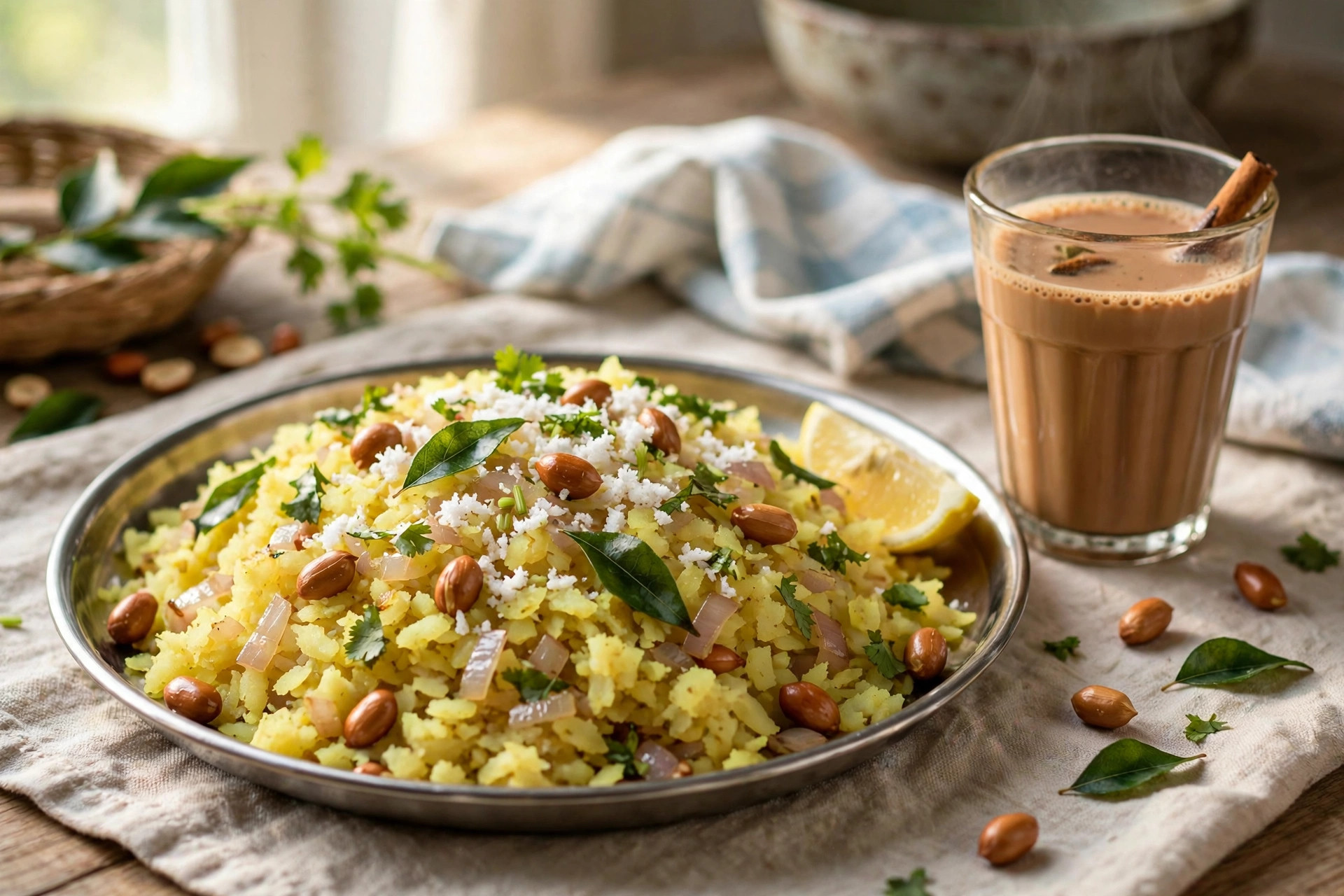
Kanda poha is a light Maharashtrian breakfast made from flattened rice, sautéed onions, peanuts and curry leaves, finished with lemon juice and fresh coriander. The poha turns soft and fluffy, with a gentle tang and a mild crunch from the peanuts. This recipe shows you how to make it at home in about 20 minutes.
Ingredients
These quantities serve four people as a breakfast. Use thick poha, since thin poha turns mushy when rinsed.
- 2 cups thick poha (flattened rice)
- 2 medium onions, finely chopped
- 1/4 cup raw peanuts
- 2 green chillies, finely chopped
- 1 tablespoon ginger, finely chopped
- 1 teaspoon mustard seeds
- 1 teaspoon cumin seeds
- 8 to 10 curry leaves
- 1/2 teaspoon turmeric powder
- 1 tablespoon sugar
- 1 tablespoon lemon juice
- 2 tablespoons oil
- Salt to taste
- 2 tablespoons chopped coriander leaves
- 2 tablespoons grated coconut, for garnish (optional)
Step-by-Step Method
Put the poha in a large strainer and rinse it under running water for 30 seconds. Shake the strainer gently to remove the extra water, then set it aside for 5 minutes. The poha should feel soft when pressed but not wet or sticky.
Sprinkle the turmeric, sugar and salt over the rinsed poha and mix gently with your fingers. Keep the poha aside while you prepare the tempering. Do not press or mash the flakes, or they will break apart.
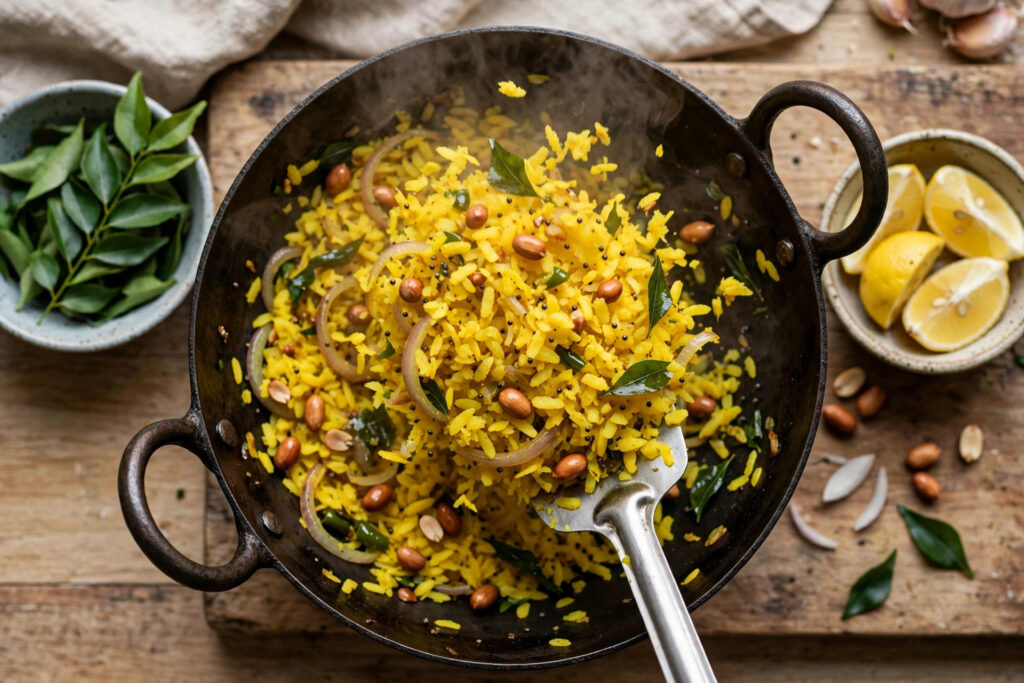
Heat the oil in a wide pan or kadhai on medium heat. Add the peanuts and roast for 2 minutes until they turn light golden and crunchy. Remove them and set them aside on a plate.
In the same pan, add the mustard seeds and let them splutter. Add the cumin seeds, curry leaves, ginger and green chillies. Cook for 30 seconds until the curry leaves turn crisp and fragrant.
Add the chopped onions and cook for 3 to 4 minutes until they turn soft and translucent. Do not brown them, since the onions should stay sweet and mild in this dish.
Add the seasoned poha to the pan and mix gently with a spatula. Cook on low heat for 3 to 4 minutes, folding the poha from the bottom so it warms evenly. Add the roasted peanuts and mix once more.
Switch off the heat, sprinkle the lemon juice over the poha, and mix gently. Garnish with chopped coriander leaves and grated coconut. Serve hot with a cup of tea or filter coffee.
Cooking Time & Servings
Preparation takes about 10 minutes, including rinsing and resting the poha. Cooking takes about 10 minutes. The total time is 20 minutes. This recipe serves 4 people as a breakfast.
Serve one generous plate per person, hot from the pan. Kanda poha is best eaten fresh, since it dries out as it sits. A cup of masala chai or filter coffee pairs well with it.
If you are cooking for two, halve all the ingredients and use a smaller pan. For a larger group of eight, double the quantities and use a wide kadhai so the poha warms evenly.
Practical Tips
Use thick poha for this recipe. Thick flakes hold their shape after rinsing and stay fluffy when cooked. Thin poha absorbs water too fast and turns into a sticky paste.
Rinse the poha briefly and let it rest for 5 minutes. Thirty seconds under water is enough. The flakes soften as they rest, so do not soak them or they will turn soggy.
Roast the peanuts separately before the tempering. Roasting them first gives an even golden colour and a good crunch. Set them aside and add them back at the end so they stay crisp.
Mix the poha gently with a spatula, folding it from the bottom. Stirring hard breaks the soft flakes and turns the dish mushy. A light hand keeps the poha fluffy and separate.
Common Mistakes
Over-rinsing the poha is the most common mistake. Too much water makes the flakes soggy and sticky. Rinse for only 30 seconds, shake off the water, and let the poha rest for 5 minutes.
Using thin poha is another frequent error. Thin flakes break apart and turn mushy in the pan. Always buy thick poha, labelled as medium or thick, for this recipe.
Browning the onions too much changes the dish. The onions should stay soft and translucent, not golden and crisp. Cook them for 3 to 4 minutes on medium heat and add the poha on time.
Skipping the rest after rinsing leaves the poha hard in the centre. Five minutes of resting lets the water soak evenly into every flake. The poha should feel soft when pressed between your fingers.
Variations
For a vegetable poha, add 1/2 cup of finely chopped carrots, peas and capsicum with the onions. Cook the vegetables for 4 to 5 minutes until soft, then add the poha the same way.
For a batata poha, add 1 medium boiled potato, cubed, with the onions. The potato adds body and makes the breakfast more filling. It pairs well with a little extra lemon juice.
For a sev poha, top the finished poha with 2 tablespoons of nylon sev and a few pomegranate seeds. The sev adds crunch and the pomegranate adds a sweet, juicy bite.
For a Jain-style version, skip the onion and add extra peanuts and curry leaves. The flavour stays close to the original, with a slightly nuttier base. You can also serve it with our rava upma recipe for a South Indian breakfast spread, or try our crispy masala dosa for a weekend brunch.
Storage
Kanda poha tastes best fresh and hot from the pan. If you have leftovers, let them cool completely, then store them in an airtight container in the fridge for up to 1 day.
Reheat the poha in a pan on low heat with a sprinkle of water. Cover the pan for 2 minutes so the steam softens the flakes again. Add a fresh squeeze of lemon juice and a few coriander leaves before serving.
Do not freeze poha, since the flakes turn hard and dry on thawing. Cook only as much as you need for one meal. Leftover poha can also be shaped into small patties and shallow-fried the next morning for a crunchy snack.
Frequently Asked Questions
Why is my poha sticky instead of fluffy?
Sticky poha usually comes from over-rinsing or using thin poha. Rinse thick poha for only 30 seconds, shake off the water, and rest it for 5 minutes. Mix gently in the pan and avoid pressing the flakes.
Can I make kanda poha without peanuts?
Yes, you can skip the peanuts or replace them with 2 tablespoons of roasted chana dal or cashew pieces. The crunch will be a little different, but the poha will still taste good. Add the substitute at the same stage.
What is the difference between kanda poha and batata poha?
Kanda poha uses onions as the main flavour, while batata poha adds boiled potato cubes for a heartier dish. Both use the same poha base and tempering. Many homes combine both, with onion and potato together.
Can I prepare poha the night before?
You can chop the onions and measure the ingredients the night before, but rinse and cook the poha fresh in the morning. Rinsed poha left overnight turns soggy. Fresh poha takes only 20 minutes from start to finish.
What should I serve with kanda poha?
Masala chai, filter coffee and a glass of buttermilk all pair well. Serve it with our rava upma for a tiffin spread, or with a gulab jamun for a sweet ending. Learn more about the dish on Wikipedia’s poha page and see more breakfast ideas in the BBC Good Food Indian recipes collection.
For more recipes, visit our About Us page, or try our aloo paratha recipe for another breakfast favourite.
Leave a Reply