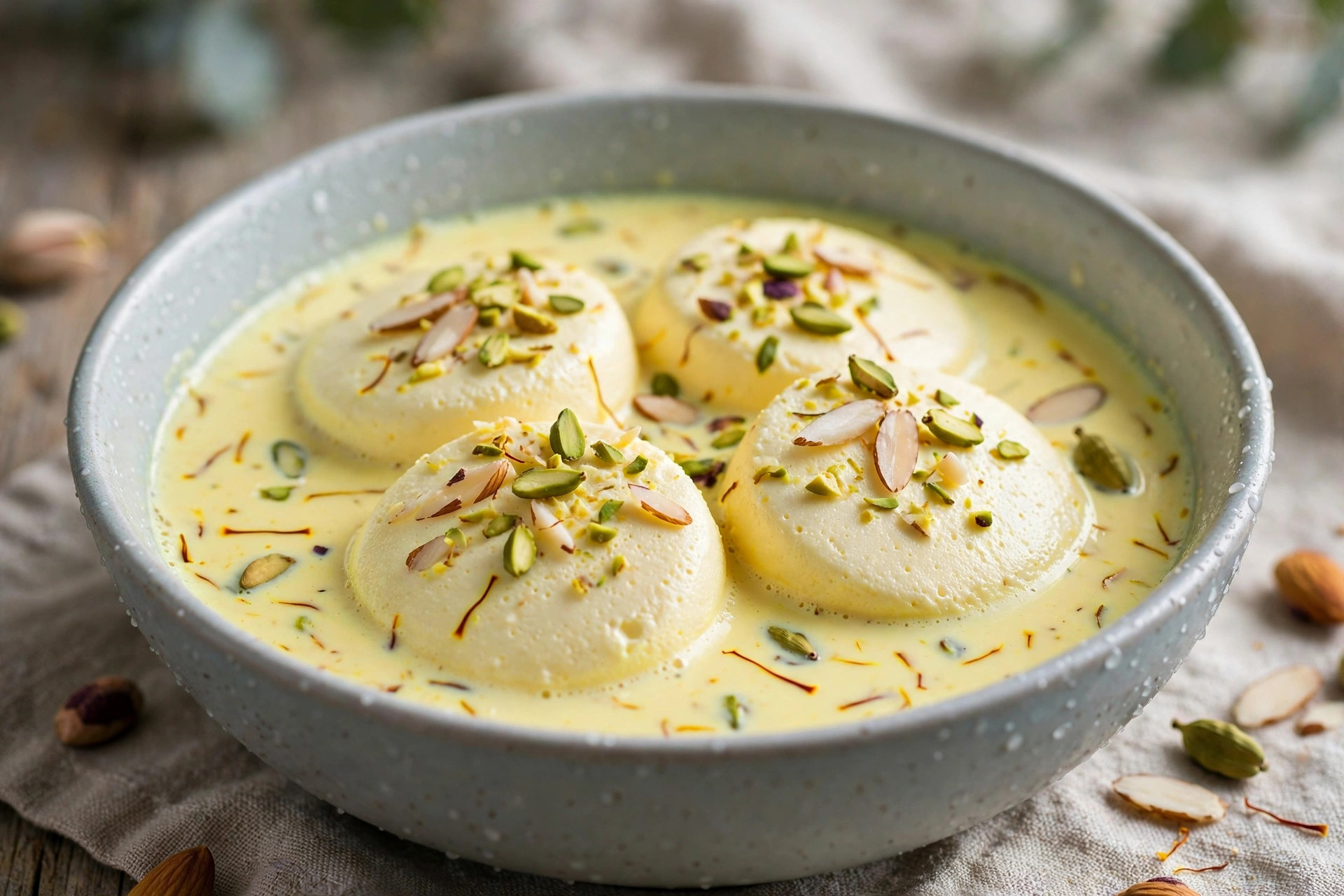
Rasmalai is a classic Indian dessert made from soft chenna discs, gently cooked in light sugar syrup and then soaked in chilled saffron milk flavoured with cardamom, pistachios and almonds. The discs turn spongy and soak up the creamy milk, giving a melt-in-the-mouth sweetness. This recipe shows you how to make it at home in about 50 minutes, plus chilling time.
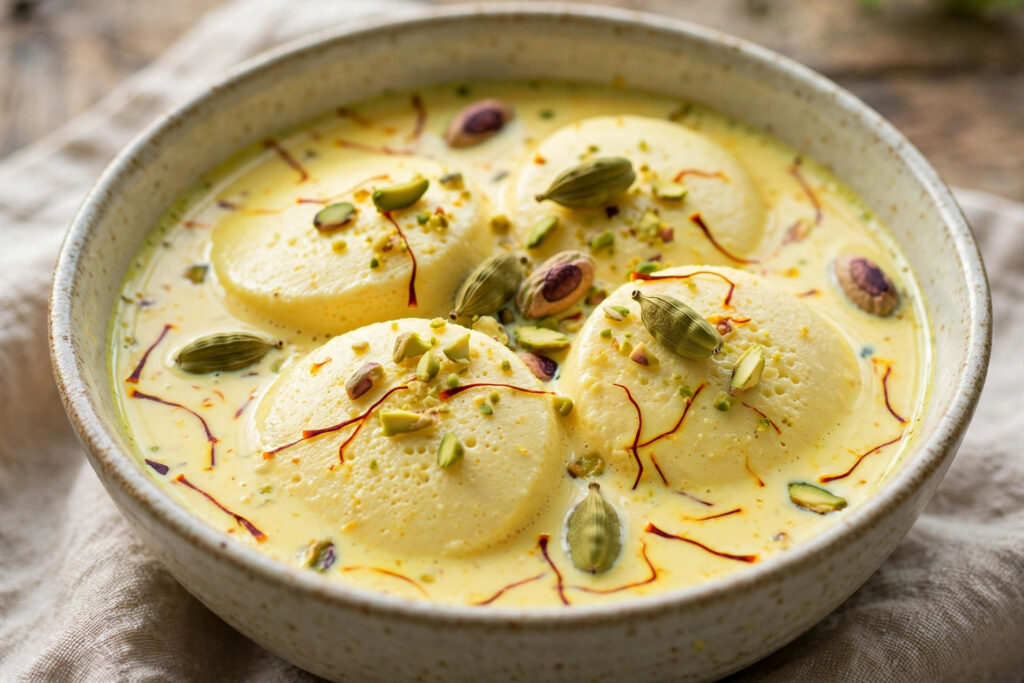
Ingredients
These quantities serve four people, making 8 rasmalai discs. Use full-cream milk for the best chenna, since toned milk gives a drier, grainy texture.
- 1 litre full-cream milk, for the chenna
- 2 tablespoons lemon juice, mixed with 2 tablespoons water
- 1 teaspoon cornflour
- 1 cup sugar, for the syrup
- 4 cups water, for the syrup
- 4 green cardamoms, lightly crushed
For the saffron milk:
- 500 ml full-cream milk
- 1/4 cup sugar, or to taste
- 10 to 12 saffron strands, soaked in 2 tablespoons warm milk
- 4 green cardamoms, powdered
- 2 tablespoons chopped pistachios
- 2 tablespoons chopped almonds
- 1 teaspoon rose water (optional)
Step-by-Step Method
Pour 1 litre of milk into a heavy pan and bring it to a gentle boil on medium heat, stirring often so it does not stick. Switch off the heat, wait one minute, then add the lemon juice a spoonful at a time, stirring gently. The milk will split into soft curds and pale green whey within a minute.
Line a strainer with a clean muslin cloth and pour the curdled milk through it. Rinse the chenna under cold running water for 30 seconds to wash away the lemon taste. Gather the cloth and squeeze out the extra water gently, then hang the bundle for 30 minutes to drain.
Open the cloth and transfer the chenna to a plate. Knead it with the heel of your palm for 5 to 6 minutes until it turns smooth, soft and free of grains. Add the cornflour and knead for one more minute until it blends in fully.
Divide the chenna into 8 equal portions and roll each into a smooth ball with no cracks. Press each ball gently into a flat disc about 1 cm thick. Smooth the edges with your fingers so the discs hold their shape while cooking.
Make the syrup by boiling 1 cup of sugar with 4 cups of water and the crushed cardamoms in a wide pan. When the syrup boils, slide the discs in one by one. Cover the pan and cook on medium-high heat for 12 to 15 minutes. The discs will swell to almost double their size.
Switch off the heat and let the discs rest in the syrup for 10 minutes. Lift each disc gently with a slotted spoon and press it lightly between two spoons to squeeze out the syrup. Do not press too hard, or the discs will turn flat and dense.
While the discs cook, make the saffron milk. Boil 500 ml of milk in a pan, add the sugar, saffron milk and cardamom powder, and simmer on low heat for 8 to 10 minutes until it thickens slightly. Let it cool to room temperature.
Place the squeezed discs in a wide bowl and pour the cooled saffron milk over them. Cover and chill in the fridge for 3 to 4 hours so the discs soak up the milk. Garnish with chopped pistachios and almonds, add the rose water if using, and serve chilled.
Cooking Time & Servings
Preparation takes about 20 minutes, including making and kneading the chenna. Cooking takes about 30 minutes for the syrup, discs and saffron milk. The total active time is 50 minutes, plus 30 minutes of draining and 3 to 4 hours of chilling.
This recipe makes 8 rasmalai discs and serves 4 people, two discs each. Serve the rasmalai chilled in small bowls, with a spoon of the saffron milk over each disc. It works well as the sweet course after a festive meal.
If you are cooking for two, halve all the ingredients and make 4 discs. For a larger group of eight, double the quantities and cook the discs in two batches so the syrup stays at a rolling boil.
Practical Tips
Use full-cream milk for the chenna. Full-cream milk gives soft, moist chenna that kneads into smooth discs. Toned or skimmed milk gives dry, grainy chenna that cracks and breaks while cooking.
Knead the chenna until it is completely smooth. Five to six minutes of kneading is usually enough. The chenna should feel soft and greasy on your palm, with no grainy bits. Smooth chenna makes spongy discs that swell well.
Keep the syrup at a rolling boil while the discs cook. A strong boil helps the discs puff up and turn spongy. If the syrup simmers gently, the discs stay small and dense. Use a wide pan so the discs have room to expand.
Squeeze the discs gently after cooking. Pressing too hard flattens them and squeezes out the softness. A light press between two spoons removes the syrup without crushing the disc.
Common Mistakes
Overcooking the milk while splitting it is the most common mistake. Boiling the curdled milk hard makes the chenna tough and rubbery. Switch off the heat first, then add the lemon juice slowly and stir gently.
Skipping the rinse is another frequent error. Unrinsed chenna keeps a sour lemon taste that spoils the sweet milk. Rinse the chenna under cold water for 30 seconds right after straining it.
Under-kneading the chenna leaves it grainy and cracked. Grainy chenna makes discs that break apart in the syrup. Knead until the chenna turns smooth and soft, with no visible grains.
Adding the discs to cold or lukewarm syrup stops them from puffing up. The syrup must be at a full rolling boil when the discs go in. Slide them in one by one and cover the pan at once.
Variations
For a kesar badam rasmalai, add 2 tablespoons of almond paste to the saffron milk while it simmers. The almond paste makes the milk thicker and richer, with a nutty flavour that suits festive occasions.
For a mango rasmalai, stir 1/2 cup of mango pulp into the cooled saffron milk before pouring it over the discs. Use ripe, sweet mangoes for the best flavour. This version is a favourite in the summer months.
For a rose rasmalai, add 1 tablespoon of rose water and a few drops of rose syrup to the milk. The rose gives a gentle floral note and a pale pink colour. You can also serve rasmalai with our gulab jamun for a dessert platter, or try our rasgulla recipe for another milk sweet.
Storage
Rasmalai tastes best chilled and fresh. Store it in the saffron milk in an airtight container in the fridge for up to 2 days. The discs keep soaking up the milk, so they turn softer with time.
Do not freeze rasmalai, since the chenna discs turn hard and spongy on thawing. Keep the container covered so the milk does not pick up smells from the fridge. Serve the rasmalai cold, straight from the fridge, with a garnish of nuts.
Frequently Asked Questions
Why is my rasmalai hard instead of soft?
Hard discs usually come from overcooked chenna or under-kneading. Switch off the heat before adding lemon juice, knead the chenna until smooth, and cook the discs in a rolling boil. Chill the rasmalai for 3 to 4 hours so the discs soak up the milk.
Can I use store-bought paneer for rasmalai?
Store-bought paneer is pressed and firm, so it does not knead into smooth, spongy discs. Fresh chenna made at home is the right base for rasmalai. Make the chenna from full-cream milk as described in this recipe.
Why do my chenna discs break in the syrup?
Discs break when the chenna is grainy, under-kneaded, or too wet. Drain the chenna well, knead it for 5 to 6 minutes until smooth, and roll crack-free balls. A teaspoon of cornflour also helps the discs hold their shape.
How long should I chill rasmalai before serving?
Chill the rasmalai for at least 3 to 4 hours so the discs soak up the saffron milk fully. Overnight chilling works well too, and the flavour improves as it rests. Serve it cold, straight from the fridge.
What should I serve with rasmalai?
Rasmalai is a complete dessert on its own and needs no partner. Serve it with our kheer for a festive dessert spread, or with a gajar ka halwa in winter. Learn more about the dish on Wikipedia’s ras malai page and see more dessert ideas on BBC Good Food.
For more recipes, visit our About Us page, or try our gulab jamun recipe for another classic Indian sweet.
Leave a Reply