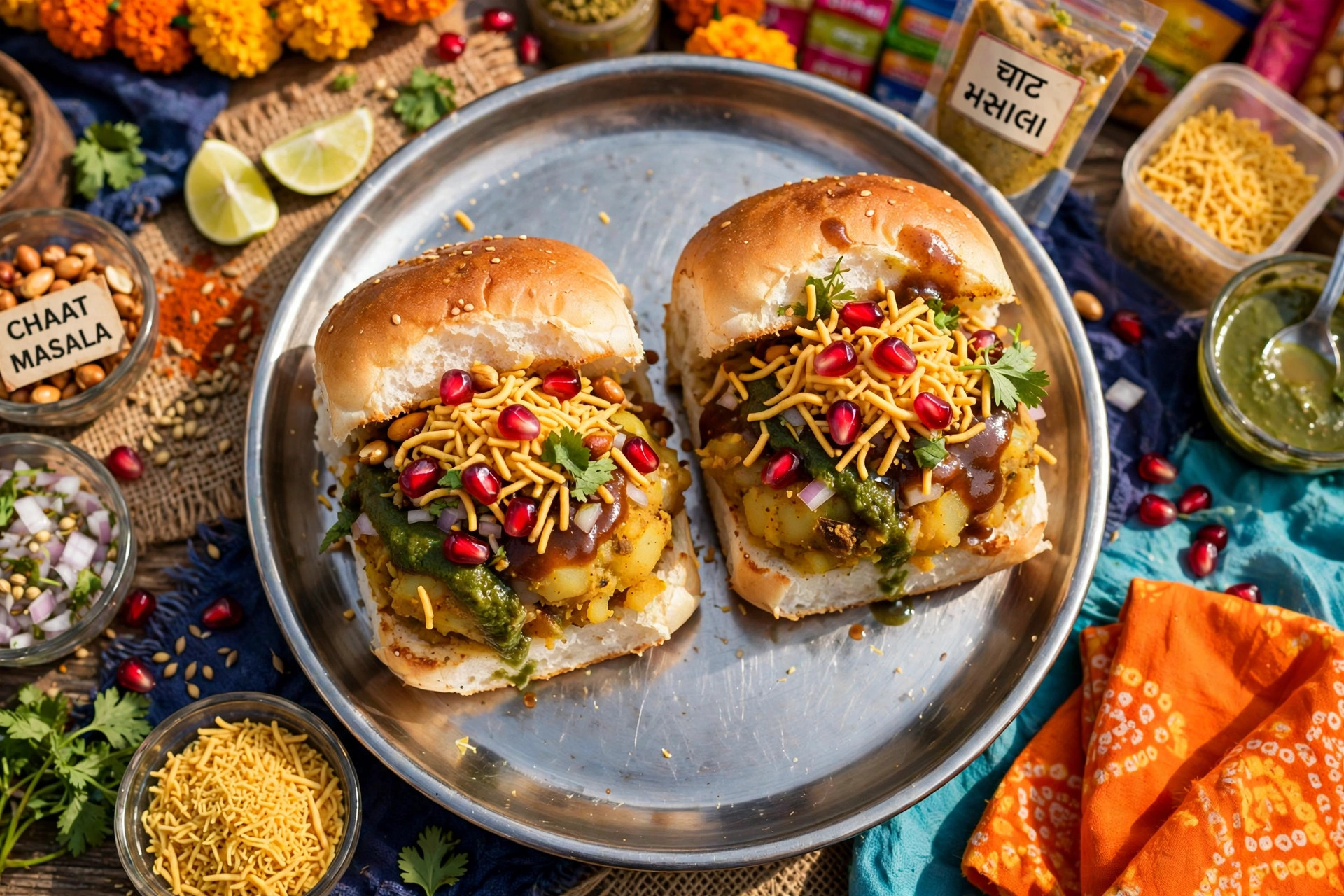
Dabeli is a Mumbai street snack of spiced mashed potato filling layered with tamarind and garlic chutneys, pomegranate seeds and sev, tucked into buttered pav. The filling is sweet, tangy and warmly spiced. This recipe shows how to make dabeli at home in about 40 minutes.
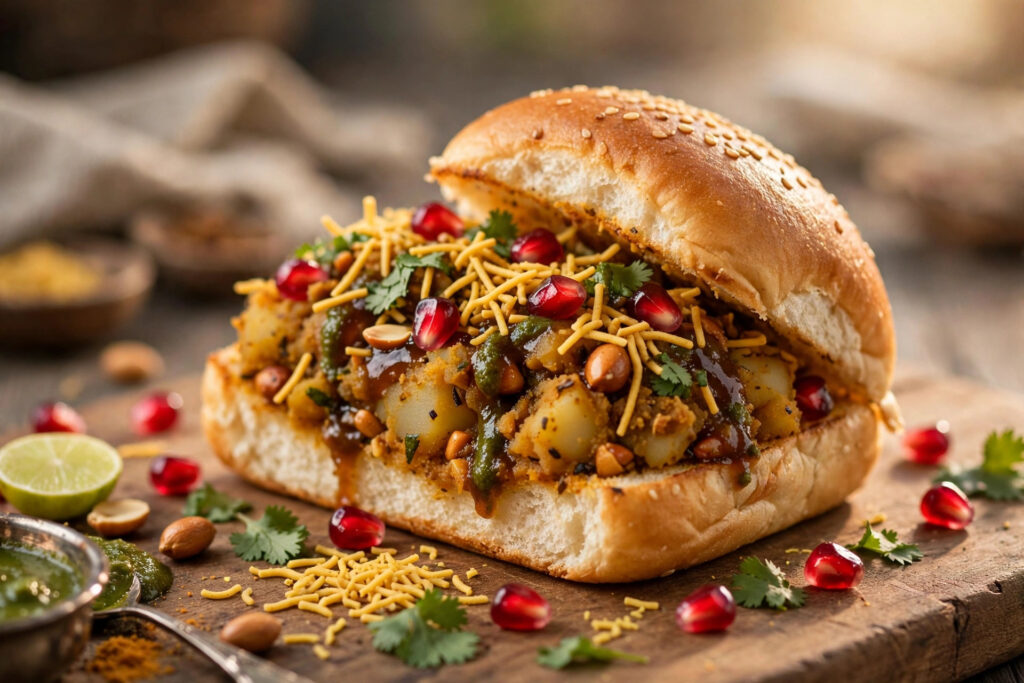
Ingredients
These quantities make 8 dabelis and serve 4 people. Boil the potatoes ahead so the filling comes together fast.
- 4 medium potatoes (about 400 g), boiled and peeled
- 2 tablespoons dabeli masala
- 1 tablespoon tamarind chutney
- 1 tablespoon garlic chutney
- 1 teaspoon sugar
- 1 teaspoon salt, or to taste
- 1 tablespoon oil
- 8 pav (soft bread rolls)
- 1/2 cup sev (crisp chickpea noodles)
- 1/4 cup pomegranate seeds
- 1 medium onion, finely chopped
- 2 tablespoons chopped coriander leaves
- 2 tablespoons butter, for toasting
- 2 tablespoons roasted peanuts
Step-by-Step Method
Mash the boiled potatoes in a large bowl until smooth, with no big lumps. Add the spice mix, tamarind chutney, garlic chutney, sugar and salt, and mix well. The filling should taste sweet, tangy and warmly spiced.
Heat the oil in a pan on medium heat and add the potato mix. Cook for 4 to 5 minutes, stirring often, until the filling turns soft and holds together. Switch off the heat and let it cool for 5 minutes.
Spread the filling on a plate and press it flat. Sprinkle the sev, pomegranate seeds, chopped onion and coriander leaves over the top. The filling is now ready to scoop into the pav.
Slice each pav in half, keeping one edge joined like a pocket. Spread a little tamarind chutney and garlic chutney inside each pav. Fill it with 2 tablespoons of the potato mix and press gently to close.
Melt the butter in a flat pan or tawa on medium heat. Place the filled pav in the pan and toast for 1 to 2 minutes on each side until golden and crisp outside. Press gently with a spatula so the pav seals.
Serve the dabeli hot at once, with extra sev and pomegranate seeds on the side. The pav should be crisp outside and soft inside, with the spiced potato filling warm and tangy.
Cooking Time & Servings
Preparation takes about 15 minutes, including boiling the potatoes and chopping the onion. The filling takes 5 minutes and toasting takes 10 minutes, for a total of about 40 minutes.
This dabeli makes 8 pieces and serves 4 people, two each. Serve them hot with extra sev, pomegranate seeds and a cup of masala chai on the side.
If you are cooking for two, halve all the ingredients and make 4 pieces. For a larger group of eight, double the filling and toast the pav in small batches so they stay crisp.
Practical Tips
Mash the potatoes until completely smooth before mixing in the spices for the dabeli. Lumps in the filling make the pav hard to fill and the texture uneven in every bite.
Toast the pav in butter on medium heat, not high heat. Butter gives a golden, crisp crust, while high heat burns the pav before the filling warms through.
Add the sev and pomegranate seeds just before serving. Sev added too early turns soft in the filling, while fresh sev stays crisp and gives the snack its crunch.
Keep one edge of the pav joined when you slice it. The joined edge holds the filling inside like a pocket and stops it from spilling out while you toast the pav.
Common Mistakes
Using too little chutney is the most common mistake. Dry filling tastes bland, so spread tamarind and garlic chutney inside the pav as well as mixing it into the potato filling.
Overfilling the pav is another error. Too much filling spills out in the pan and burns, so use only 2 tablespoons of filling per pav and press it gently to close.
Toasting on high heat burns the pav outside while the filling stays cold. Keep the heat medium and toast for 1 to 2 minutes on each side until golden and crisp.
Skipping the roasted peanuts takes away the crunch that makes dabeli special, so mix them into the filling or sprinkle them on top with the sev before serving.
Variations
For a cheese dabeli, add 2 tablespoons of grated cheese inside the pav with the filling. The cheese melts as the pav toasts and gives a rich, creamy bite.
For a spicy dabeli, add 1 extra teaspoon of garlic chutney and a pinch of red chilli powder to the filling. The extra heat suits the sweet tamarind chutney, so serve it with cool curd.
For a Jain version, skip the onion and garlic chutney and use only tamarind chutney in the filling. The snack stays sweet and tangy. Pair it with our vada pav for a Mumbai spread, or try our bhel puri for a chaat feast.
Storage
Store the dabeli filling in an airtight container in the fridge for up to 2 days. Reheat it in a pan on low heat with a splash of water, stirring gently until warm.
Toast the pav fresh just before serving, since toasted pav turns soft within an hour. Keep the sev, pomegranate seeds and onion separate until you fill the pav, and toast only as many pieces as you plan to serve at once.
Frequently Asked Questions
Why is my dabeli filling too dry?
Dry filling usually means too little chutney or overcooked potatoes. Add 1 extra tablespoon of tamarind chutney and a splash of water while cooking. The filling should feel soft and hold together.
Can I use store-bought chutneys?
Yes, ready-made tamarind and garlic chutneys work well and save time. Taste them first and adjust the sugar and salt in the filling, since shop chutneys vary in sweetness.
Can I make the filling ahead of time?
Yes, cook the potato filling fully, cool it, and store it in the fridge for up to 2 days. Bring it to room temperature before filling the pav, then toast fresh.
What pav should I use?
Use soft, fresh pav rolls, the same kind used for vada pav. Day-old pav turns hard when toasted, so buy fresh pav on the day you plan to serve the snack. Fresh pav also toasts more evenly and stays soft inside.
What should I serve with dabeli?
Masala chai, extra sev and pomegranate seeds are the classic partners. Serve it with our pani puri and aloo tikki chaat for a chaat spread. Learn more about the dish on Wikipedia’s dabeli page and see more Indian recipes in the BBC Good Food Indian recipes collection.
For more recipes, visit our About Us page, or try our halwai-style samosa recipe for another street food favourite.
Leave a Reply