
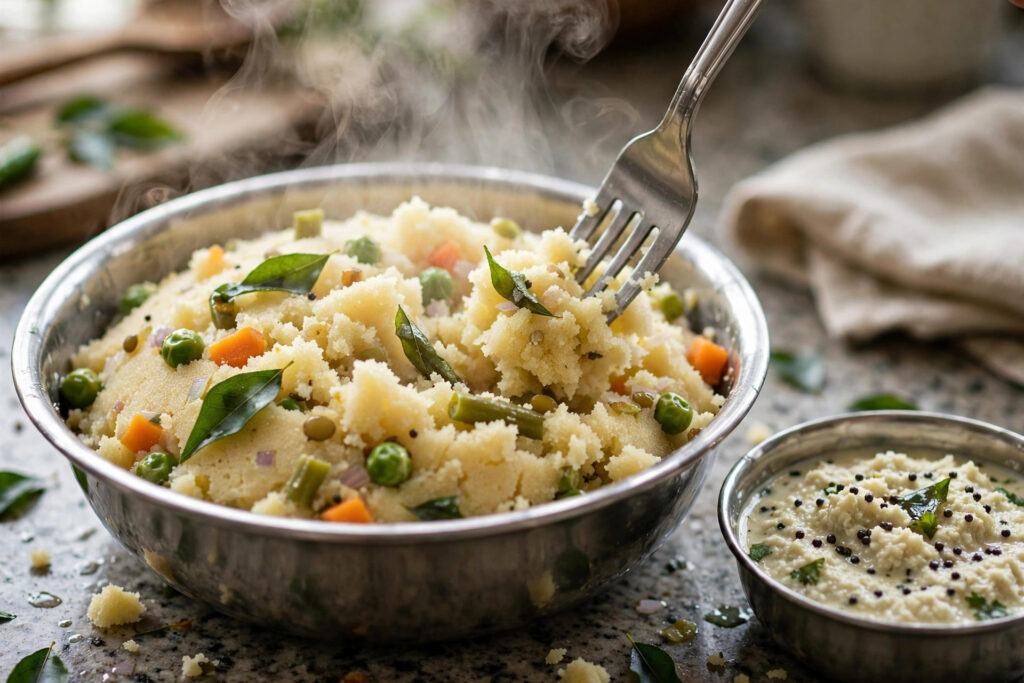
Rava upma is a soft South Indian tiffin made from roasted semolina, cooked with onions, vegetables and a mild tempering of mustard seeds, curry leaves and green chillies. The semolina turns fluffy and light, with a gentle warmth from the spices. This recipe shows you how to make it at home in about 25 minutes.
Ingredients
These quantities serve four people as a breakfast. Roast the rava well before cooking, since this step decides the final texture.
- 1 cup fine rava (semolina or sooji)
- 1 medium onion, finely chopped
- 1 medium tomato, finely chopped
- 1/4 cup green peas
- 1 medium carrot, peeled and finely diced
- 2 green chillies, slit lengthwise
- 1 tablespoon ginger, finely chopped
- 1 teaspoon mustard seeds
- 1 teaspoon urad dal
- 1 teaspoon chana dal
- 8 to 10 curry leaves
- 2 1/2 cups water
- 2 tablespoons oil, plus 1 tablespoon ghee
- 1 tablespoon lemon juice
- Salt to taste
- 2 tablespoons chopped coriander leaves
- 2 tablespoons grated coconut, for garnish (optional)
Step-by-Step Method
Heat a heavy pan on medium heat and add the rava. Roast it dry for 4 to 5 minutes, stirring often, until it turns light golden and smells nutty. Remove the rava and set it aside on a plate.
Heat the oil and ghee in the same pan on medium heat. Add the mustard seeds and let them splutter. Add the urad dal and chana dal, and fry for 1 minute until they turn light golden.
Add the curry leaves, ginger and green chillies, and cook for 30 seconds until fragrant. Add the chopped onion and cook for 3 to 4 minutes until it turns soft and translucent.
Add the carrot and peas, and cook for 3 minutes until the vegetables soften slightly. Add the chopped tomato and cook for 2 more minutes until it turns soft.
Pour in 2 1/2 cups of water and add the salt. Bring the water to a rolling boil on medium-high heat. Taste the water and adjust the salt, since this is the last chance to season the upma evenly.
Reduce the heat to low. Add the roasted rava slowly in a thin stream, stirring constantly with the other hand so no lumps form. Keep stirring for 2 minutes as the rava absorbs the water and thickens.
Cover the pan with a lid and cook on the lowest heat for 3 to 4 minutes. Switch off the heat, add the lemon juice, and fluff the upma gently with a fork. Garnish with coriander leaves and grated coconut, and serve hot.
Cooking Time & Servings
Preparation takes about 10 minutes, including chopping the vegetables. Cooking takes about 15 minutes. The total time is 25 minutes. This recipe serves 4 people as a breakfast.
Serve one generous plate per person, hot from the pan. Rava upma is best eaten fresh, since it thickens as it sits. Coconut chutney and a cup of filter coffee pair well with it.
If you are cooking for two, halve all the ingredients and use a smaller pan. For a larger group of eight, double the quantities and use a wide kadhai so the rava cooks evenly.
Practical Tips
Roast the rava until it turns light golden and smells nutty. Roasting keeps the upma fluffy and stops it from turning sticky. Four to five minutes on medium heat is enough, with constant stirring.
Add the rava slowly in a thin stream while stirring. Pouring it all at once makes lumps that are hard to break. One hand pours, the other stirs, and the upma stays smooth.
Use the right water ratio for a soft upma. Two and a half cups of water for 1 cup of rava gives a soft, moist texture. Add a little hot water at the end if the upma looks dry.
Taste the boiling water before adding the rava. The water should taste slightly salty, since the rava will absorb the salt as it cooks. Adjusting the salt later is hard once the upma thickens.
Common Mistakes
Skipping the roast is the most common mistake. Unroasted rava turns sticky and pasty in the pan. Roast it for 4 to 5 minutes until light golden, even if you are short on time.
Adding the rava too fast is another frequent error. A quick dump creates lumps that never break apart. Add the rava in a thin, steady stream while stirring without a pause.
Using too little water makes the upma dry and hard. The standard ratio is 2 1/2 cups of water for 1 cup of rava. Measure the water carefully instead of guessing.
Stirring too hard after the rava goes in can make the upma gummy. Stir gently and steadily for 2 minutes, then cover and let the low heat finish the cooking.
Variations
For a vegetable upma, add 1/2 cup of finely chopped beans, capsicum and corn with the carrots and peas. Cook the vegetables for 4 to 5 minutes until soft, then add the water and rava the same way.
For a tomato upma, add one extra chopped tomato and 1/2 teaspoon of red chilli powder with the onions. The tomato gives a tangy, reddish colour and a slightly sharper flavour.
For a curd upma, let the cooked upma cool for 5 minutes, then mix in 1/2 cup of whisked curd. The curd makes the upma soft and creamy, and it works well as a light lunch.
For a vermicelli upma, replace the rava with 1 cup of roasted vermicelli and use 2 cups of water. Cook it the same way for a different texture. You can also serve it with our kanda poha recipe for a tiffin spread, or try our crispy masala dosa for a weekend brunch.
Storage
Rava upma tastes best fresh and hot from the pan. If you have leftovers, let them cool completely, then store them in an airtight container in the fridge for up to 1 day.
Reheat the upma in a pan on low heat with a sprinkle of water. Cover the pan for 2 to 3 minutes so the steam softens the rava again. Add a fresh squeeze of lemon juice and a few coriander leaves before serving.
Frequently Asked Questions
Why is my upma lumpy instead of soft?
Lumps form when the rava is added too fast or the rava was not roasted. Roast the rava until light golden, then add it in a thin stream while stirring constantly. Stirring without a pause keeps the upma smooth.
What is the right water ratio for rava upma?
Two and a half cups of water for 1 cup of fine rava gives a soft, moist upma. For a firmer upma, use 2 1/4 cups of water instead. Measure the water carefully, since guessing often leads to a dry or soggy result.
Can I make rava upma without vegetables?
Yes, you can skip the vegetables and make a plain upma with only onion, green chillies and the tempering. The method stays the same. Serve it with coconut chutney and a little pickle on the side.
Can I roast the rava in advance?
Yes, roast a larger batch of rava and store it in an airtight jar for up to 2 weeks. Let it cool fully before storing. Roasted rava saves time on busy mornings and keeps the upma fluffy.
What should I serve with rava upma?
Coconut chutney, sambar and a cup of filter coffee are the classic partners. You can also serve it with our kanda poha for a tiffin spread, or with a gulab jamun for a sweet ending. Learn more about the dish on Wikipedia’s upma page and see more breakfast ideas in the BBC Good Food Indian recipes collection.
For more recipes, visit our About Us page, or try our aloo paratha recipe for another breakfast favourite.
Leave a Reply