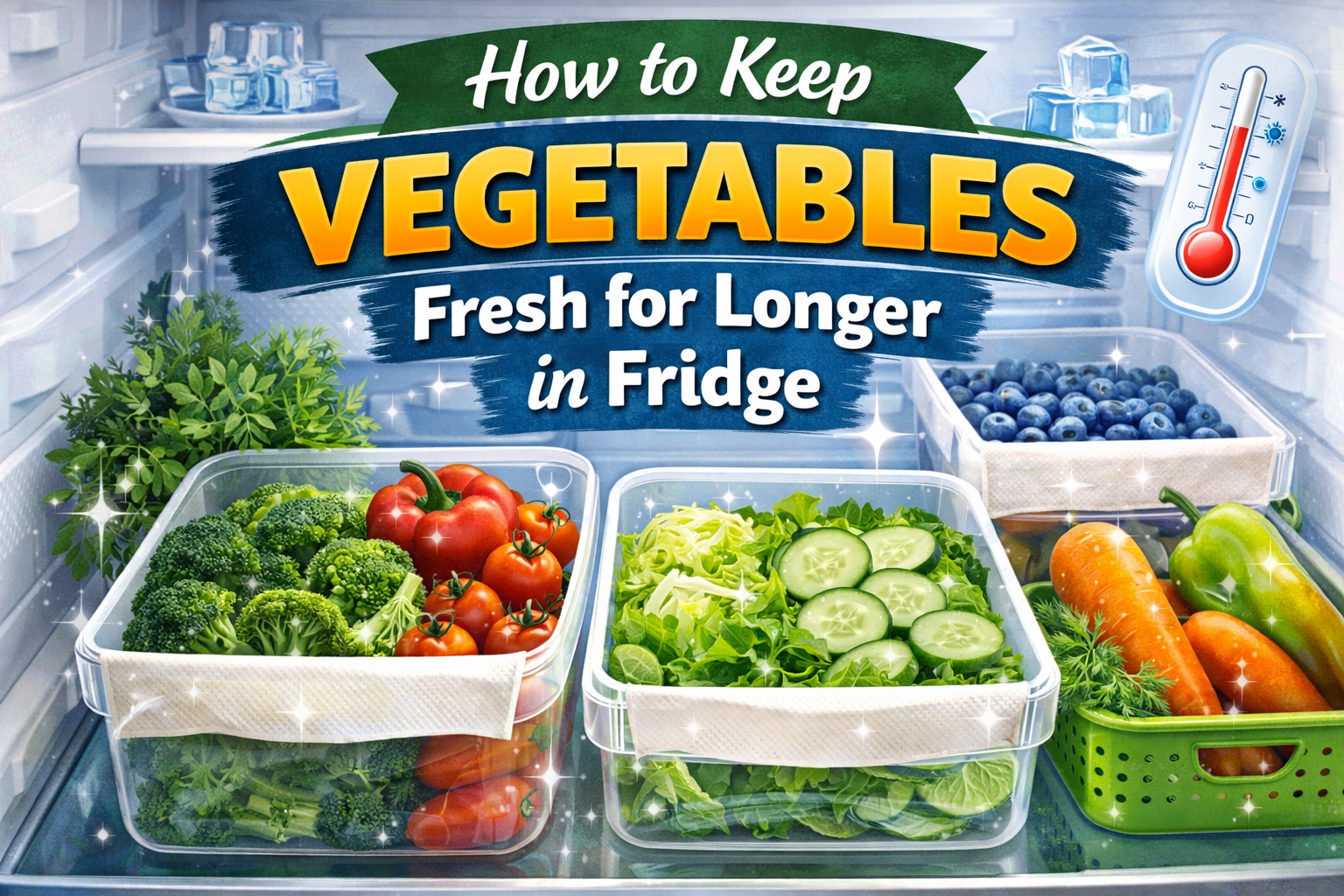
How to Keep Vegetables Fresh for Longer in Fridge : There is a particular kind of household frustration that is universally understood: the discovery of a bag of slimy spinach, a once-firm cucumber now reduced to a mushy, wrinkled shadow of its former self, or a bunch of herbs that have wilted into a sad, brown bouquet. It is a scene played out in kitchens everywhere, a daily ritual of throwing away money and good food. The average household wastes a significant portion of the produce it buys, and much of this waste is due not to spoilage before we can eat it, but to improper storage from the moment we bring it home.
We place our trust in the refrigerator, that great white box of cold salvation, believing it to be a timeless vault for our edibles. In reality, it is a complex environment of varying temperatures, humidity levels, and air flows. Treating it as a single, uniform space is the primary reason our vegetables perish prematurely. This comprehensive guide will transform you from a passive produce storer into an active preservationist. By understanding the unique needs of different vegetables and harnessing a few simple tools and techniques, you can double, or even triple, the lifespan of your groceries. This is not just about saving money; it is about respecting the resources that went into growing that food and reducing your household’s environmental footprint. Prepare to learn the science and the art of keeping your vegetables vibrantly fresh.
Read More : How to Remove Oil Stains from Kitchen Tiles Easily
Part 1: Understanding Your Refrigerator’s Microclimates
Before we can properly store anything, we must first understand the landscape of our refrigerator. It is not a box of uniform cold. It is a series of microclimates, each with distinct characteristics that can either preserve or destroy your vegetables.
- The Crisper Drawers: Your Humidity Sanctuary: These drawers are designed for one specific purpose: to control humidity. This is where the vast majority of your vegetables should live.
- High Humidity Setting: This setting closes a vent, trapping moisture inside the drawer. This creates a humid environment that is perfect for vegetables that wilt and lose moisture easily. Think of delicate, leafy things.
- Low Humidity Setting: This setting opens a vent, allowing moisture to escape. This is better for fruits and vegetables that are prone to rot in high humidity. They need airflow to prevent moisture from settling on their surfaces and encouraging mold.
- The Main Compartment: The Cold Heart: The temperature in the main part of the fridge is typically colder and more consistent than the door, but it also has constant air circulation from the fan. This moving air can be very drying, which is why you generally want to avoid storing unwrapped vegetables here.
- The Door: The Warm Zone: The refrigerator door is the warmest part of the fridge because it is constantly exposed to room air whenever it is opened. The temperature here can fluctuate significantly. This zone is best suited for condiments, drinks, and other items that are preserved through pickling, high sugar, or other means—not for fresh vegetables that require a stable, cold environment.
- The Back vs. The Front: The back of any given shelf or drawer is typically colder than the front. Be mindful of this when placing items. More sensitive items might fare better towards the front, while things that like it very cold can go towards the back.
With this knowledge, you are ready to become a master of refrigerator organization. The first and most critical step is learning to breathe.
Part 2: The Cardinal Rule – Do Not Wash Before Storing
This is the single most important rule in the entire guide. It goes against every instinct of wanting to clean your groceries as soon as you get home, but it is non-negotiable for longevity.
Moisture is the number one enemy of fresh vegetables in storage. When you wash your vegetables and then place them in the refrigerator, you are trapping that added moisture. This creates a perfect breeding ground for bacteria and mold. It accelerates spoilage, turning crisp lettuce into pinkish slime and firm berries into fuzzy science experiments.
The only exception to this rule is if the vegetables are caked in visible dirt from a farmer’s market. In that specific case, you can gently rinse them, but you must then dry them absolutely thoroughly. A salad spinner is an excellent tool for this, followed by laying the items out on a clean kitchen towel to air dry completely before storing. For the vast majority of store-bought vegetables, simply brush off any loose dirt with your hand or a soft brush and leave them unwashed until the moment you are ready to use them.
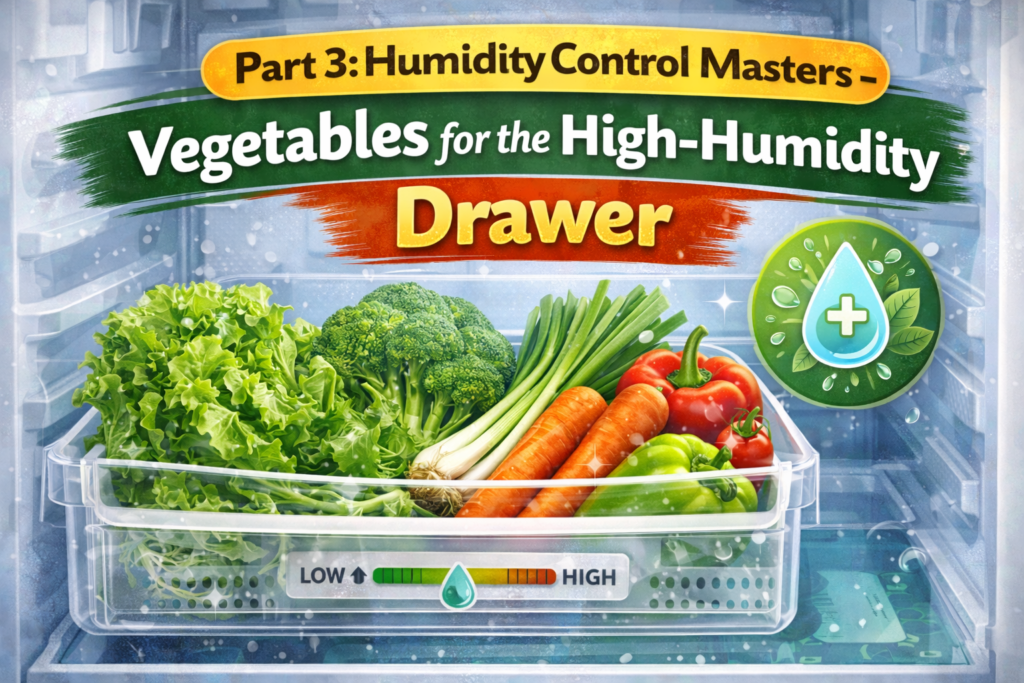
Part 3: Humidity Control Masters – Vegetables for the High-Humidity Drawer
These vegetables are primarily composed of water and have thin skins or large surface areas that make them prone to wilting and dehydration. They need the moisture-trapping environment of a high-humidity crisper drawer.
- Leafy Greens (Lettuce, Spinach, Kale, Swiss Chard, Arugula): These are the most perishable items in your fridge and require the most care. After ensuring they are dry, the best storage method is to create a gentle, humid microclimate within the drawer.
- The Paper Towel Method: Line a reusable container or a large zip-top bag with a few layers of dry paper towels. Place your unwashed greens on top, then cover them with another dry paper towel. Seal the container or bag, leaving it slightly open for a tiny bit of airflow if using a bag. The paper towels act as a humidity buffer, absorbing any excess moisture that might condense on the leaves while also providing a reservoir of humidity to prevent wilting. Change the paper towels if they become overly damp.
- Herbs (Cilantro, Parsley, Dill, Mint): Delicate herbs are best treated like a bouquet of flowers.
- The Bouquet Method: Trim the very ends of the stems. Place the bunch, stems down, in a jar or glass with about an inch of water, like cut flowers. Loosely cover the leafy tops with a plastic bag or a produce bag. Store this in the refrigerator door or on a shelf. This method keeps them hydrated and crisp for up to two weeks. Change the water every couple of days.
- Asparagus: Asparagus also benefits from the bouquet method. Trim the bottoms and stand them upright in a container with an inch of water. Loosely cover the tops with a bag.
- Broccoli and Cauliflower: These cruciferous vegetables prefer humidity. Store them unwashed in their original packaging or in a loosely closed plastic bag in the high-humidity drawer. If you’ve already broken them into florets, they will last longer if stored this way.
- Green Beans: Place them in a perforated plastic bag or a container with a slightly open lid in the high-humidity drawer. They need airflow to prevent mold but humidity to prevent shriveling.
- Celery: Celery is a water channel that will go limp without moisture. The best way to store it is to wrap the entire stalk tightly in aluminum foil. The foil allows the ethylene gas the celery emits to escape while maintaining enough humidity to keep the stalks crisp for weeks. Alternatively, you can store it in a container of water in the fridge, changing the water every few days.
- Corn (unshucked): Leave the husks on! The husks are nature’s perfect packaging, retaining humidity. Store it loose in the high-humidity drawer. Use it quickly, as corn’s sugars begin converting to starch as soon as it’s picked.
- Peas (in the pod) and Snow Peas: Store these in a perforated bag or a container with a slightly open lid in the high-humidity drawer.
- Scallions (Green Onions): These can be stored like herbs. Place them root-end down in a glass with a little water and cover the green tops with a bag. Change the water every few days. You can also chop them and store the whites and greens in separate containers in the freezer for long-term use.
Part 4: The Airflow Advocates – Vegetables for the Low-Humidity Drawer
These vegetables are prone to rot if they are kept in a moist environment. They benefit from the increased airflow of a low-humidity crisper drawer, which allows excess moisture to escape.
- Mushrooms: Mushrooms are like sponges. Storing them in plastic traps moisture, turning them slimy. The ideal storage for mushrooms is in a paper bag. The paper absorbs excess moisture while allowing them to breathe. Place the paper bag in the low-humidity drawer.
- Peppers (Bell Peppers and Chilies): Peppers prefer a drier environment. Store them loose in the low-humidity drawer. A paper bag is also a good option.
- Summer Squash (Zucchini and Yellow Squash): These can be sensitive to excess cold and moisture. Store them loose in the low-humidity drawer, or in a perforated bag. Try not to crowd them.
- Cucumbers: Cucumbers are cold-sensitive and can develop “chilling injury,” which appears as watery, sunken spots. Store them towards the front of the low-humidity drawer, where it is slightly warmer, and away from tomatoes and melons.
- Eggplant (Aubergine): Like cucumbers, eggplant is sensitive to cold. Store it loose in the low-humidity drawer, preferably near the front, and use it within a few days.
- Garlic and Onions (Whole, uncut): These alliums should generally not be refrigerated at all. They prefer a cool, dark, dry place with good air circulation, like a pantry or a wire basket. Refrigerating whole, uncut onions can make them soft and moldy due to the humidity. However, once you cut an onion, it must be refrigerated. Wrap it tightly in plastic wrap or store it in a sealed container and use it within a few days.
- Potatoes and Sweet Potatoes: These also do not belong in the refrigerator. The cold temperatures convert their starches into sugars more rapidly, altering their taste and texture, making them overly sweet and causing them to darken when cooked. Store them in a cool, dark, well-ventilated place like a paper bag in a pantry or cupboard, away from onions (onions can emit gases that cause potatoes to sprout faster).
Part 5: The Ethylene Emitters and the Sensitive – Managing the Gas
This is one of the most overlooked aspects of produce storage. Many fruits and vegetables naturally produce a colorless, odorless gas called ethylene as they ripen. It acts as a plant hormone, signaling nearby produce to ripen and, eventually, spoil. Some items are high producers of this gas, while others are extremely sensitive to it. Storing them together is a recipe for rapid decay.
High Ethylene Producers (Store with care):
- Apples
- Avocados
- Bananas
- Melons (Cantaloupe, Honeydew)
- Tomatoes
- Pears
- Peaches, Plums, Nectarines
Ethylene-Sensitive Items (Keep away from producers):
- Leafy Greens (Lettuce, Spinach, Kale)
- Broccoli
- Cauliflower
- Carrots
- Cucumbers
- Eggplant
- Green Beans
- Peppers
- Potatoes
The key is separation. Do not store a bowl of apples or a bunch of bananas directly above your crisper drawer full of leafy greens. The ethylene gas is heavier than air and can sink into the drawer, wreaking havoc. Keep your high-ethylene fruits in a separate area, preferably on a counter if they are still ripening, or in a different part of the fridge if they are already ripe. Many people designate one crisper drawer for “ethylene-sensitive vegetables” and the other for “everything else,” including fruits.
Part 6: Counter Culture – Vegetables That Thrive Outside the Fridge
Refrigeration is not a universal good. Some vegetables actually prefer the warmer, ambient conditions of your kitchen counter or pantry. Storing them in the cold can damage their flavor, texture, and longevity.
- Tomatoes: Refrigerating a tomato is one of the great kitchen sins. Cold temperatures halt the enzymatic processes that develop flavor and turn the flesh mealy and grainy. Always store tomatoes at room temperature, out of direct sunlight, and stem-side down. Use them within a few days of ripening.
- Potatoes and Sweet Potatoes: As mentioned, they need a cool, dark, ventilated space, but not the fridge. A paper bag in a cupboard is ideal.
- Onions and Garlic: A cool, dry, dark pantry with good airflow is perfect. Keep them away from potatoes, as they can hasten each other’s spoilage.
- Winter Squash (Butternut, Acorn, Pumpkin): These have hard skins and are built for long storage in a cool, dry place. They can last for months in a pantry but will deteriorate quickly in the humid environment of a fridge.
- Avocados (Unripe): If your avocado is hard as a rock, let it ripen on the counter. Once it yields slightly to gentle pressure, you can move it to the fridge to slow down the ripening process for a couple more days.
Part 7: Preparation and Preservation Techniques
Beyond simple storage, you can take proactive steps to extend the life of your vegetables, especially when you know you won’t be able to eat them in time.
- Blanching and Freezing: This is the gold standard for preserving many vegetables. Blanching involves briefly boiling the vegetable and then plunging it into an ice bath. This stops enzyme actions that cause loss of flavor, color, and texture. After thorough drying, you can freeze them in a single layer on a baking sheet before transferring them to freezer-safe bags or containers. This works wonderfully for:
- Green beans
- Broccoli and cauliflower florets
- Peas and corn kernels
- Spinach and kale (which will wilt and are perfect for later adding to soups or smoothies)
- Herbs in Oil or Butter: Chop delicate herbs like basil, parsley, or dill and mix them into softened butter or place them in an ice cube tray, cover with olive oil, and freeze. These herb-infused cubes are perfect for adding a burst of fresh flavor to future soups, sauces, or sautés.
- Regrowing from Scraps: This is more of a fun and sustainable trick than a preservation method, but it provides an ongoing supply of fresh greens. Place the rooted ends of scallions, the base of a head of romaine lettuce, or the tops of celery in a shallow dish of water on a sunny windowsill. Change the water every few days, and you will see new growth, giving you a continuous harvest.
Part 8: A Vegetable-by-Vegetable Quick Reference Guide
For easy reference, here is a summary table of the best storage practices for common vegetables.
| Vegetable | Location | Storage Method | Special Notes |
|---|---|---|---|
| Artichokes | Fridge (Crisper) | In a sealed plastic bag, lightly misted with water. | Use within a few days. |
| Asparagus | Fridge (Shelf) | Bouquet method: Trim ends, stand in 1″ water, cover tops loosely with a bag. | |
| Bell Peppers | Fridge (Low-Humidity Drawer) | Loose in the drawer or in a paper bag. | Keep away from ethylene producers. |
| Broccoli | Fridge (High-Humidity Drawer) | In a loosely closed plastic bag. | |
| Brussels Sprouts | Fridge (High-Humidity Drawer) | On the stalk if possible, or in a perforated bag. | |
| Cabbage | Fridge (Crisper) | Wrapped tightly in plastic wrap. | Will last for weeks. |
| Carrots | Fridge (Crisper) | In a sealed container or bag, covered with water (change weekly) OR in a perforated bag with a paper towel to absorb moisture. | If they go limp, refresh in ice water. |
| Cauliflower | Fridge (High-Humidity Drawer) | In a loosely closed plastic bag. | |
| Celery | Fridge (Crisper/Shelf) | Wrapped tightly in aluminum foil. | Can also be stored in a container of water. |
| Corn | Fridge (High-Humidity Drawer) | In the husk, loose. | Use as soon as possible. |
| Cucumbers | Fridge (Low-Humidity Drawer) | Loose, towards the front (warmer part). | Very sensitive to cold and ethylene. |
| Eggplant | Fridge (Low-Humidity Drawer) | Loose, towards the front. | Use within a few days. |
| Garlic | Pantry/Counter | In a cool, dark, well-ventilated place (mesh bag, basket). | Do not refrigerate whole heads. |
| Green Beans | Fridge (High-Humidity Drawer) | In a perforated bag or container with a slightly open lid. | |
| Herbs (Soft) | Fridge (Shelf/Door) | Bouquet method in a glass of water, covered loosely with a bag. | Cilantro, parsley, dill, mint. |
| Herbs (Hardy) | Fridge (Crisper) | Wrapped in a slightly damp paper towel inside a sealed bag. | Rosemary, thyme, oregano. |
| Kale/Chard | Fridge (High-Humidity Drawer) | The paper towel method in a container or bag. | |
| Leafy Lettuce | Fridge (High-Humidity Drawer) | The paper towel method in a container or bag. | |
| Mushrooms | Fridge (Low-Humidity Drawer) | In a paper bag. | Never store in plastic. |
| Onions (Whole) | Pantry/Counter | In a cool, dark, well-ventilated place. | Keep away from potatoes. |
| Onions (Cut) | Fridge (Shelf) | Wrapped tightly in plastic or in a sealed container. | Use within a few days. |
| Peas (in pod) | Fridge (High-Humidity Drawer) | In a perforated bag. | Use quickly. |
| Peppers (Hot) | Fridge (Low-Humidity Drawer) | Loose or in a paper bag. | |
| Potatoes | Pantry/Counter | In a cool, dark, well-ventilated place (paper bag is great). | Do not refrigerate. Keep away from onions. |
| Scallions | Fridge (Shelf/Door) | Bouquet method in a glass of water, covered loosely with a bag. | |
| Spinach | Fridge (High-Humidity Drawer) | The paper towel method in a container or bag. | |
| Summer Squash | Fridge (Low-Humidity Drawer) | Loose or in a perforated bag. | |
| Sweet Potatoes | Pantry/Counter | In a cool, dark, well-ventilated place. | Do not refrigerate. |
| Tomatoes | Counter | At room temperature, out of direct sunlight, stem-side down. | Do not refrigerate unless fully ripe and you need to slow spoilage for a day or two. |
| Winter Squash | Pantry/Counter | In a cool, dry place. | Can last for months. |
Conclusion ( How to Keep Vegetables Fresh for Longer in Fridge )
Mastering the art of vegetable storage is a journey, not a destination. It begins with observation—noticing which items in your fridge wilt first and experimenting with different methods to see what works best in your specific refrigerator and climate. It is a practice in mindfulness, transforming the act of putting away groceries from a rushed chore into an intentional act of care.
By understanding the principles of humidity, airflow, and ethylene gas, and by applying simple, reusable tools like paper towels, glass jars, and aluminum foil, you can dramatically extend the life of your fresh produce. You will save money, reduce food waste, and always have crisp, vibrant vegetables ready for a healthy meal. The crisper drawer will no longer be a place of forgotten, decaying science experiments, but a thriving, organized larder of freshness, a testament to your newfound skill as a guardian of the harvest.
8 thoughts on “How to Keep Vegetables Fresh for Longer in Fridge”