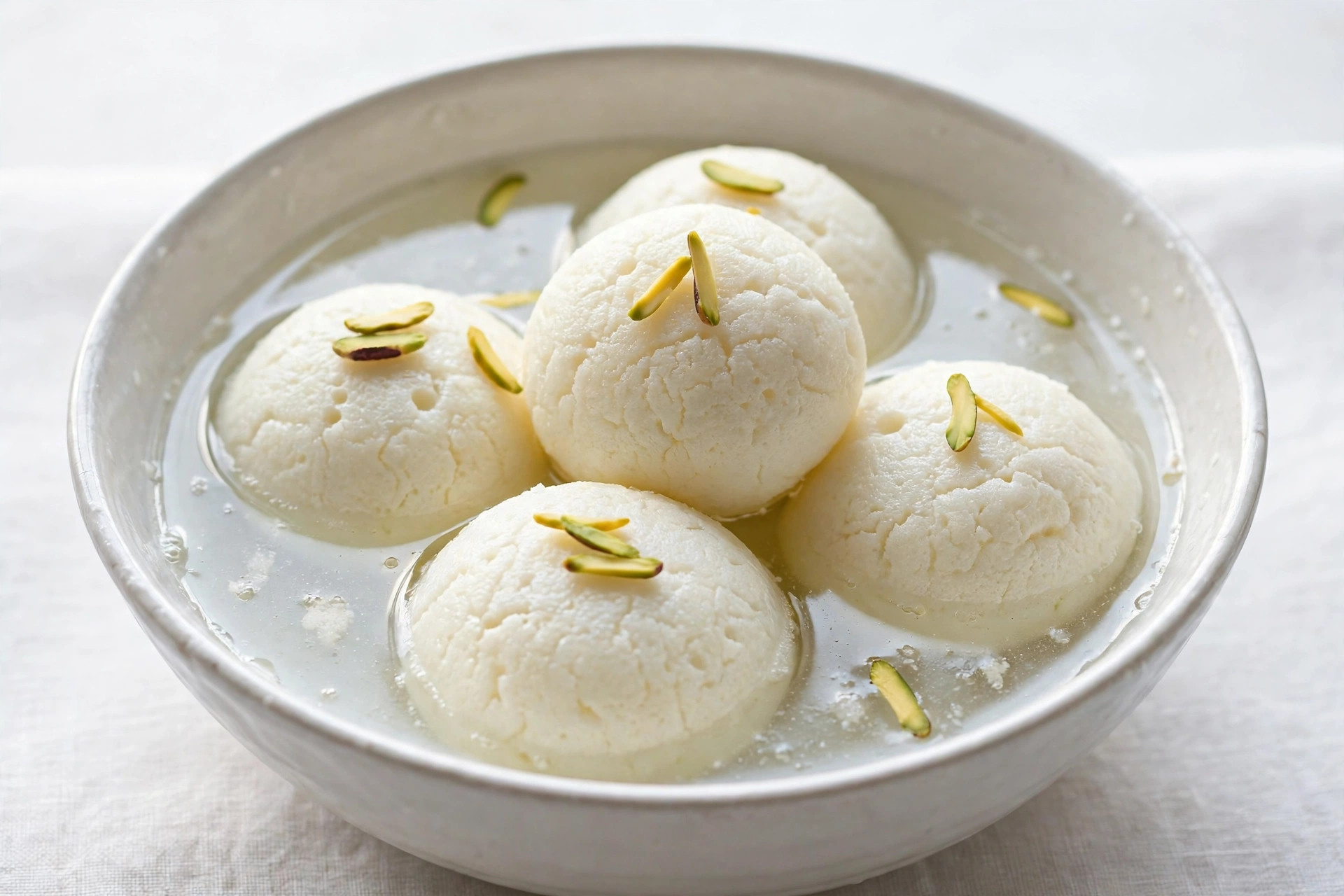
Rasgulla is a soft, spongy Bengali sweet made from fresh chenna, kneaded into smooth balls and cooked in light sugar syrup until they double in size. The rasgullas turn white, juicy and bouncy, soaking up the sweet syrup as they cook. This recipe makes about 16 rasgullas in under an hour, with a texture that stays soft for days.
Ingredients
These quantities make about 16 medium rasgullas and serve 4 people. Use full cream milk for the chenna, since toned milk gives a rubbery texture.
- 1 litre full cream milk
- 2 tablespoons lemon juice, mixed with 2 tablespoons water
- 1 teaspoon fine semolina (sooji) or 1 teaspoon plain flour
- 1 teaspoon rose water (optional)
For the sugar syrup:
- 1 cup sugar
- 4 cups water
- 2 green cardamom pods, lightly crushed
- 1 teaspoon rose water
Step-by-Step Method
Make the chenna first. Bring the milk to a boil in a heavy pan, stirring often. Turn the heat to low and add the diluted lemon juice a little at a time, stirring gently. The milk will split into curds and clear whey within a minute.
Turn off the heat and let the pan sit for 2 minutes. Pour the curds into a muslin cloth lined over a strainer. Rinse the chenna under cold running water for 30 seconds to wash away the lemon taste.
Gather the cloth and squeeze out the water gently. Hang the bundle over a tap or bowl for 30 minutes so the excess whey drains away. The chenna should feel moist and soft, not dry or dripping wet.
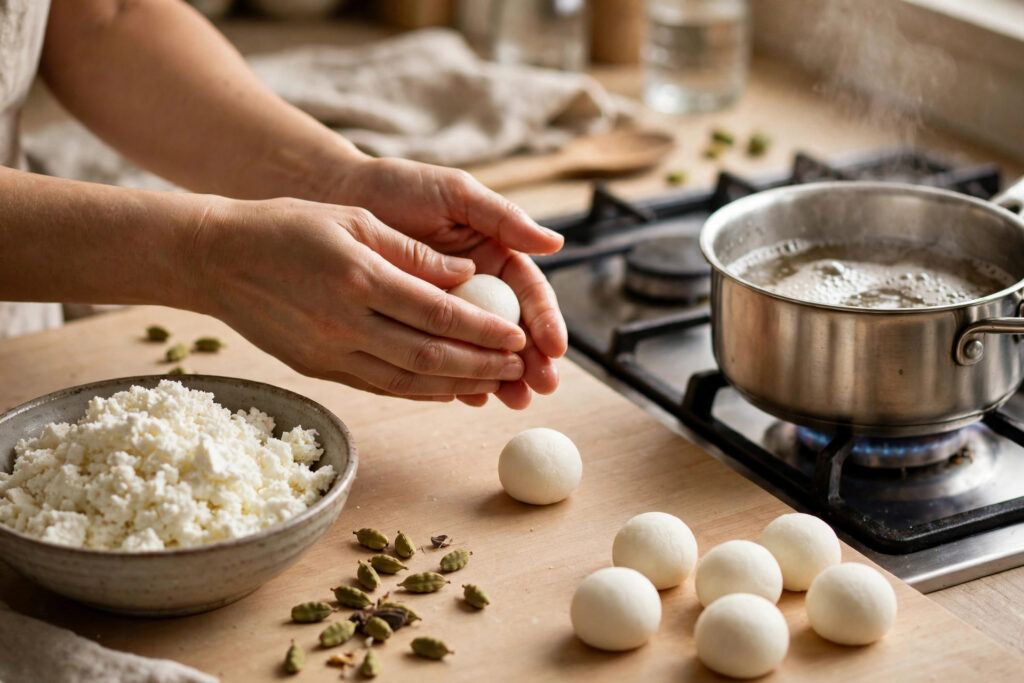
Tip the chenna onto a clean plate and knead it with your palm for 8 to 10 minutes. Add the semolina and rose water, and keep kneading until the chenna turns smooth and soft, with no grainy bits. It should come together into a soft dough that holds its shape.
Divide the dough into 16 equal parts and roll each into a smooth, crack-free ball. Make the balls small, since they will double in size. Keep them covered with a damp cloth while you make the syrup.
Make the syrup by combining the sugar, water and cardamom in a wide, deep pan. Bring it to a rolling boil on high heat. Slide the chenna balls into the boiling syrup one by one, cover the pan with a lid, and cook on high heat for 10 minutes.
Remove the lid and gently turn each rasgulla. Cover again and cook for 5 more minutes. The rasgullas should look white, doubled in size and spongy. Turn off the heat, add the rose water, and cool them in the syrup for 1 hour.
Cooking Time & Servings
Making the chenna takes about 20 minutes, including draining. Kneading and rolling take 15 minutes, and cooking takes 15 minutes. The total is about 50 minutes, plus 1 hour of cooling.
This recipe makes about 16 rasgullas and serves 4 people, four rasgullas each. Serve them chilled or at room temperature, with a little syrup spooned over the top. They make a light ending after a rich meal, such as our paneer butter masala.
Practical Tips
Use full cream milk and stop cooking the moment the milk splits. Overheating the curds after splitting makes the chenna hard, and hard chenna gives rubbery rasgullas. Turn off the heat as soon as you see clear whey.
Knead the chenna until it is completely smooth. The dough should feel like soft clay and leave a little grease on your palm. Grainy bits will show up as rough spots on the finished rasgulla.
Keep the syrup at a rolling boil while the rasgullas cook. A weak simmer will not expand them properly, and they will stay small and dense. Use a wide pan so the balls have room to grow.
Do not open the lid too often during cooking. Each time you lift it, the steam escapes and the temperature drops. Check once after 10 minutes, then cover again for the final 5 minutes.
Common Mistakes
Squeezing the chenna too dry is the most common mistake. Dry chenna will not bind into smooth balls and will crack while cooking. Hang it for only 30 minutes and keep it moist and soft.
Adding too much flour or semolina makes the rasgullas hard. One teaspoon is enough to help them hold their shape. The chenna itself should do most of the work, with the semolina playing only a small role.
Cooking the rasgullas in thick syrup is another error. Rasgulla needs a thin, watery syrup to expand and soak properly. Use the full 4 cups of water and do not reduce the syrup before adding the balls.
Using toned or skimmed milk gives poor results. Low fat milk makes grainy, rubbery chenna that never turns spongy. Always use full cream milk for rasgulla and other chenna sweets.
Variations
For a rose rasgulla, add 1 teaspoon of rose syrup to the cooking syrup along with the sugar. The rasgullas will turn a soft pink and carry a gentle rose flavour.
For a saffron rasgulla, soak a few saffron strands in 2 tablespoons of warm milk and add them to the syrup. This gives a pale golden colour and a warm, floral note.
For a stuffed rasgulla, press a small piece of chopped pistachio and almond into the centre of each ball before rolling it smooth. Serve them with our gulab jamun recipe for a dessert platter, or after our kheer recipe at a festival meal.
Storage
Store rasgulla in its syrup in an airtight container in the fridge for up to 5 days. Serve them chilled straight from the fridge, or bring them to room temperature for 20 minutes before serving. Do not heat them, since heat can make them shrink.
Unsoaked cooked rasgullas can be stored in the fridge for 2 days in a covered box. Warm the syrup and soak them again for 30 minutes before serving. You can also freeze rasgullas in their syrup for up to 1 month; thaw them overnight in the fridge.
Frequently Asked Questions
Why did my rasgullas turn flat or break in the syrup?
Flat or broken rasgullas usually come from chenna that was too wet or under-kneaded. Hang the chenna for a full 30 minutes, then knead it until completely smooth. Roll crack-free balls and cook them in a rolling boil, not a gentle simmer.
Can I use vinegar instead of lemon juice to make chenna?
Yes, use 1 tablespoon of white vinegar mixed with 2 tablespoons of water. Add it slowly until the milk splits, then rinse the chenna well. Lemon juice gives a milder flavour, but vinegar works just as well for splitting the milk.
Why are my rasgullas hard instead of spongy?
Hard rasgullas come from overheated chenna, too much flour, or a thin syrup that was not boiling hard enough. Use full cream milk, stop heating at once when the milk splits, keep the flour to 1 teaspoon, and cook in a vigorous boil.
Can I make rasgulla without semolina?
Yes, you can skip the semolina and use 1 teaspoon of plain flour instead. Some cooks use no binder at all when the chenna is perfect. A small amount of semolina simply helps the balls hold their shape while cooking.
How do I know the rasgullas are cooked?
A cooked rasgulla doubles in size, looks white and spongy, and springs back when pressed. Drop one into plain water; if it sinks, it is cooked, and if it floats, it needs a few more minutes. Learn more about the sweet on Wikipedia’s rasgulla page and see more dessert ideas in the BBC Good Food Indian dessert collection.
For more recipes, visit our About Us page, or try our moong dal khichdi recipe for a light meal before dessert.
Leave a Reply