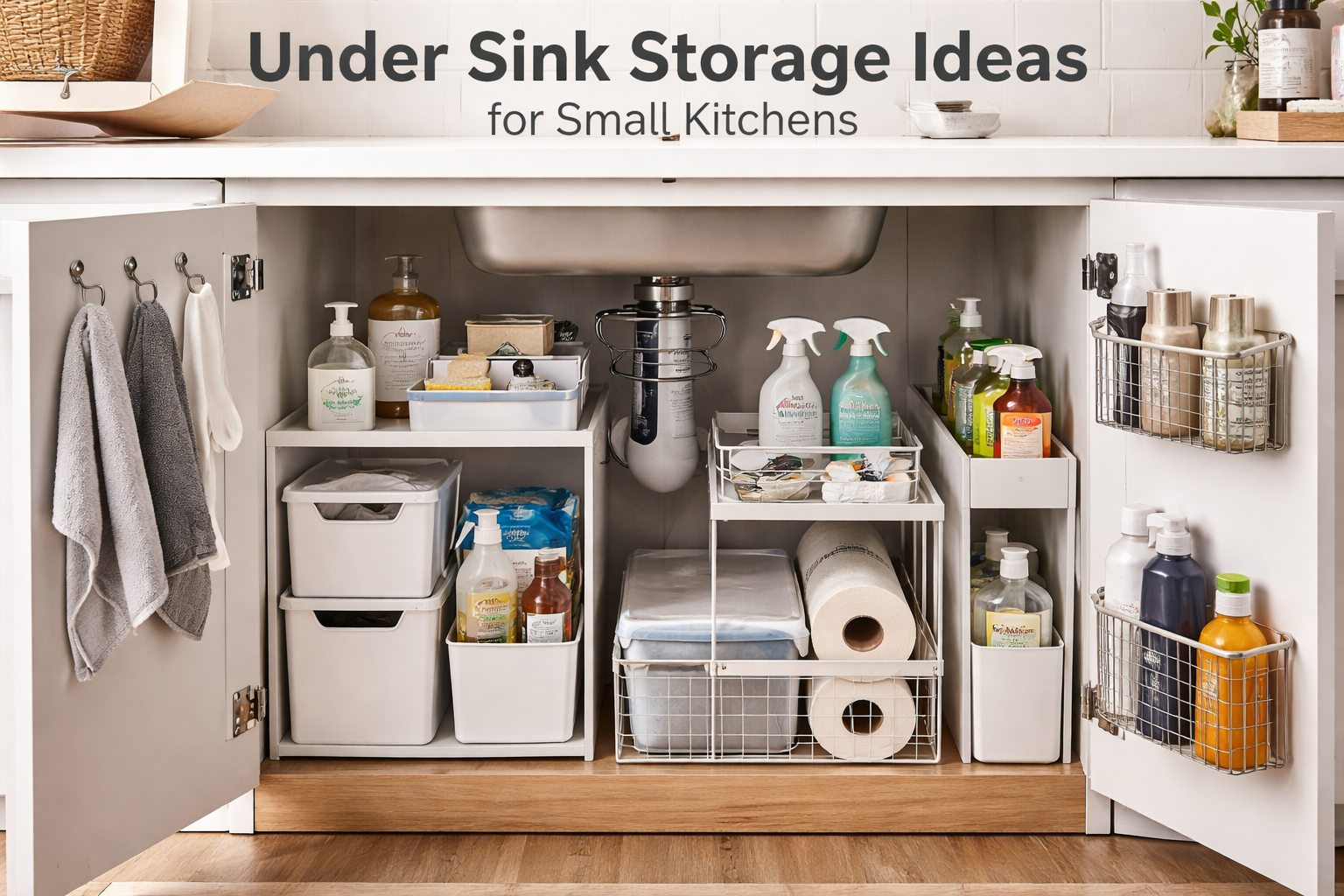
Under Sink Storage Ideas for Small Kitchens : The space under the kitchen sink. It is perhaps the most challenging storage area in any home. Plumbing pipes create awkward obstacles. The dark, damp environment discourages thoughtful organization. Items get pushed to the back and forgotten. Cleaning supplies topple over. The result is chaos—a jumble of bottles, sponges, trash bags, and things that have no other home.
Yet this challenging space represents valuable real estate in a small kitchen. When square footage is limited, every inch counts. The under-sink cabinet, properly organized, can hold a surprising amount while keeping everything accessible and orderly. The key is working with the space’s constraints rather than against them—using the vertical dimension, accommodating the plumbing, and choosing organizers designed for this specific environment.
The ideas that follow are tailored for the unique challenges of under-sink storage. They range from simple solutions like tension rods to sophisticated pull-out systems. They accommodate the plumbing that makes this space difficult while maximizing every usable inch. Whether you’re organizing a standard double-door cabinet or a more awkward configuration, these ideas will transform your under-sink area from a black hole of chaos into a model of efficiency.
Read More : Simple Pantry Organization Tips for Families
Open Shelving Kitchen Organization Ideas
Kitchen Storage Ideas for Indian Homes
1. Assessment: Understanding Your Under-Sink Space
Before purchasing any organizers, before moving any items, you must understand exactly what you’re working with. The under-sink area varies dramatically between kitchens, and solutions that work in one space may fail in another .
Start by emptying the cabinet completely. Remove everything—every bottle, every sponge, every forgotten item. This is uncomfortable but necessary. You need to see the bare space .
Now measure carefully. Measure the height from the cabinet floor to the underside of the counter. Measure the depth from front to back. Measure the width at the front and at the back—cabinets often taper. Note where pipes are located and how much clearance they require. Measure the space to the left and right of the pipes, and the space in front of them .
Sketch a rough diagram of your space, including pipe locations and dimensions. This diagram will be essential when shopping for organizers. Take photos with your phone for reference .
Consider the condition of the space. Is it clean? Is there any sign of leaks or moisture damage? Address any issues before organizing. A leak that damages your new organizers is frustrating; a leak that damages your belongings is worse .

2. The Purge: Removing What Doesn’t Belong
With the cabinet empty, you can see everything you’ve been storing under the sink. Now it’s time to evaluate whether each item belongs there .
Start by checking expiration dates. Cleaning supplies, like food, eventually lose effectiveness. If that bottle of cleaner is years old, it’s time to dispose of it properly. Check local regulations for hazardous waste disposal .
Evaluate whether items truly belong under the sink. This space is ideal for cleaning supplies, dish soap, sponges, scrub brushes, trash bags, and recycling. It is not ideal for food storage—the temperature and humidity fluctuations can affect quality. It’s also not ideal for items that could be damaged by leaks .
Consider frequency of use. Items you use daily—dish soap, sponges—should be most accessible. Weekly cleaners can be slightly deeper. Monthly or occasional items can go in the hardest-to-reach spots .
Be ruthless about duplicates. How many bottles of all-purpose cleaner do you really need? How many sponges? Keep what you’ll reasonably use; donate or discard the rest .
3. Tension Rods: Simple, Adjustable, Brilliant
Tension rods are perhaps the most versatile under-sink organizing tool. These spring-loaded bars require no tools, no drilling, and can be positioned to solve multiple storage challenges .
Use tension rods vertically to create dividers. Place a rod on each side of the pipes, creating separate zones. This prevents items from migrating into the pipe area and getting lost. Multiple rods can create multiple compartments .
Use tension rods horizontally to hang spray bottles. Position a rod at the front of the cabinet, and hang bottles from their triggers. This lifts them off the cabinet floor, freeing up space below and keeping bottles accessible. Adjust the rod height based on your bottle sizes .
Use tension rods near the back of the cabinet to prevent items from sliding too far back. This creates a barrier that keeps items within reach while still allowing you to use the full depth .
Use tension rods to hold cleaning cloths or dish towels. Simply drape them over the rod, and they’ll stay accessible while drying .
The beauty of tension rods is their adjustability. As your needs change, you can reposition them. They require no permanent installation, making them perfect for rentals .
4. Stackable Bins and Drawers: Creating Levels
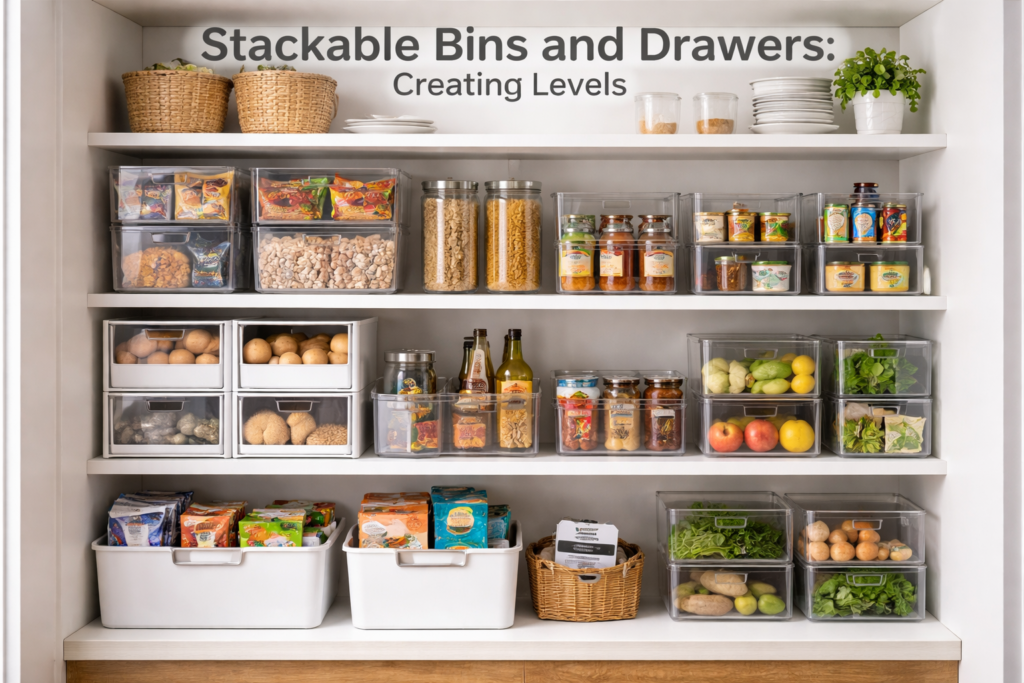
The under-sink cabinet has vertical space that often goes unused. Stackable bins and drawers create multiple levels of storage, effectively doubling your capacity .
Look for stackable bins designed specifically for under-sink use. These units are typically narrower to fit around pipes, and they come in various heights. Choose clear bins so you can see contents without pulling them out .
For a more sophisticated solution, consider stackable drawers. These units slide out like mini-drawers, providing access to items at the back without removing everything in front. They’re available in configurations designed to fit around plumbing .
When stacking, place heavier items in lower bins, lighter items above. This maintains stability and makes accessing heavy items easier—no lifting heavy bottles from high stacks .
Label bins clearly. When you can see at a glance what’s inside, you’re less likely to create chaos searching for items. Labels also help family members return items to their proper places .
5. Pull-Out Organizers: Bringing the Back Forward
Deep under-sink cabinets present a particular challenge: items at the back are difficult to access and easily forgotten. Pull-out organizers solve this problem by bringing the contents to you .
Sliding wire baskets are a popular solution. These units sit on the cabinet floor and slide forward on built-in rollers. They’re available in various widths to fit different cabinet sizes. Place frequently used items in the front of the basket, less frequent items toward the back .
For a more custom solution, consider a pull-out drawer system. These units attach to the cabinet floor and provide full-extension drawers that bring everything into view. They’re more expensive than wire baskets but provide superior access .
Some pull-out systems are designed specifically to accommodate plumbing. These units have cutouts or adjustable configurations that fit around pipes while maximizing storage. They’re worth the investment for the access they provide .
When installing pull-out organizers, ensure they don’t interfere with plumbing or prevent the cabinet doors from closing. Test the full range of motion before committing .
6. Door-Mounted Storage: Utilizing Vertical Door Space
The insides of under-sink cabinet doors represent valuable storage territory that is almost always wasted. Door-mounted solutions put this space to work .
Over-door racks hang from the top of the cabinet door and provide pockets for storing cleaning supplies, sponges, and small items. Choose versions with mesh or clear pockets so you can see what’s inside .
Adhesive-mounted wire baskets attach directly to the door. Use them to hold scrub brushes, cleaning cloths, or small bottles. These baskets are removable and require no drilling, making them ideal for rentals .
For a simpler solution, adhesive hooks can hold lightweight items. Hang measuring cups, small scrub brushes, or rubber gloves from hooks mounted on the door .
When using door-mounted storage, ensure the door can still close securely and that items don’t interfere with plumbing or other contents. Test with the door closed before loading .
7. Turntables and Lazy Susans: Reaching the Back
Lazy susans—rotating trays—are excellent for under-sink storage. They bring items at the back forward with a simple spin, eliminating the need to reach into dark corners .
Choose a lazy susan with a low profile to fit under pipes. Measure the available height carefully—you need clearance for both the tray and the items on it .
For corner under-sink cabinets, a lazy susan is essential. It transforms dead corner space into accessible storage. Two-tier models double your capacity in the same footprint .
Consider using multiple smaller lazy susans rather than one large one. This allows you to create zones—one for cleaning supplies, one for dish soap and sponges—while maintaining the rotating access .
Look for lazy susans with raised edges to prevent items from sliding off during rotation. Non-slip liners on the tray surface add another layer of security .
8. Tiered Organizers: Stadium-Style Visibility
Tiered organizers create stepped levels that allow you to see items at the back as easily as the front. These “stadium-style” units are perfect for under-sink cabinets where depth makes visibility difficult .
Use a tiered organizer for small bottles and cleaning supplies. Place shorter items in front, taller behind, and you can see everything at a glance. No more forgotten bottles at the back .
For sponges and scrub brushes, a small tiered organizer keeps them visible and accessible. This prevents the damp sponge pile that often accumulates under the sink .
Tiered organizers come in various widths and step configurations. Measure your space carefully and choose one that fits without interfering with plumbing .
Some tiered organizers are designed specifically for under-sink use, with narrow profiles that fit around pipes. These are worth seeking out for their optimized design .
9. Caddies and Baskets with Handles: Portable Cleaning Stations
Sometimes the best under-sink storage is portable. Caddies and baskets with handles allow you to grab an entire category of items and carry them where needed .
Use a caddy to hold all-purpose cleaners, glass cleaner, and other spray bottles. When it’s time to clean, grab the caddy and carry it with you. This eliminates multiple trips and keeps supplies organized .
Use a basket for sponges, scrub brushes, and cleaning cloths. A handle makes it easy to pull out when needed and return when done .
For trash bags and recycling bags, a basket keeps rolls contained and accessible. Choose a size that fits your typical bag quantities .
Label caddies and baskets so everyone knows what belongs where. “All-Purpose Cleaners,” “Kitchen Tools,” “Trash Bags”—clear labels make maintenance easy .
10. Pipe Concealment and Coverage
The pipes under the sink are necessary but unsightly. While not strictly storage, concealing or covering pipes can make the space feel more intentional and can even create additional storage opportunities .
Pipe covers are available in various materials and styles. These wrap around exposed pipes, creating a cleaner look. Some are designed to match your cabinet finish .
For a DIY solution, consider using a tension rod and curtain to hide the pipe area. A small curtain attached with Velcro or tension rod conceals the pipes while allowing access when needed .
If you have space between pipes and the cabinet wall, consider using that space for narrow storage. Slim caddies designed for tight spaces can fit between pipes and wall, utilizing otherwise wasted area .
Never attempt to move or modify plumbing yourself. This requires professional skills and permits. Work around existing pipes; don’t try to relocate them .
11. Moisture Management: Protecting Your Storage
The under-sink area is prone to moisture—from dishwashing, from leaks, from humidity. Proper moisture management protects both your storage solutions and your belongings .
Start with a liner on the cabinet floor. Waterproof liners protect the cabinet from spills and make cleaning easier. Choose a liner with raised edges to contain any liquid that might escape .
Consider a leak detector. These small devices sit on the cabinet floor and sound an alarm if they detect moisture. They provide early warning of leaks before major damage occurs .
Use open baskets and bins rather than solid containers when possible. Open storage allows air circulation, reducing moisture buildup. If you must use solid containers, ensure they have ventilation .
Check under the sink regularly for signs of moisture. A quick monthly inspection can catch small problems before they become big ones. Look for dampness, mold, or water stains .
If your under-sink area is consistently damp, consider a dehumidifier or moisture-absorbing product. These can reduce humidity and protect your belongings .
12. Custom Solutions for Awkward Spaces
Every under-sink cabinet is different, and sometimes standard products don’t fit. For truly awkward spaces, custom solutions may be necessary .
Consider a DIY approach using basic materials. Plywood can be cut to create custom shelves that fit around pipes. Simple construction skills can yield perfectly fitted storage .
Use small, individual containers rather than trying to find one organizer that fits everything. A collection of small bins and baskets can be arranged to fit the available space, even if it’s irregular .
For very tight spaces, consider magnetic strips mounted on the cabinet wall. These can hold metal items like scissors, tweezers, or small tools, utilizing space that would otherwise go unused .
If you’re handy, consider building a custom pull-out unit. Using drawer slides and plywood, you can create a drawer that fits your exact space and accommodates your plumbing. This is more work but yields perfect results .
| Storage Solution | Best For | Installation Required | Approximate Cost | Space Utilized |
|---|---|---|---|---|
| Tension Rods | Hanging spray bottles, creating dividers | None | $ | Vertical and horizontal |
| Stackable Bins | Creating multiple levels | None | $ | Vertical |
| Pull-Out Organizers | Deep cabinets, access to back items | Moderate | $$-$$$ | Full cabinet depth |
| Door-Mounted Racks | Lightweight items on cabinet doors | Adhesive or over-door | $ | Inside cabinet doors |
| Lazy Susans | Corner cabinets, reaching back items | None | $ | Corner and deep spaces |
| Tiered Organizers | Small bottles, visibility | None | $ | Shelf space |
| Caddies with Handles | Portable cleaning supplies | None | $ | Portable |
| Pipe Covers | Concealing pipes | Varies | $-$$ | Aesthetic |
| Moisture Management | Protecting from leaks | None | $ | Floor and walls |
| Custom Solutions | Awkward spaces | Moderate to Difficult | Varies | Any available space |
The Under-Sink Philosophy
The under-sink cabinet teaches a valuable lesson about small-space living: every inch counts, and the most challenging spaces often reward creative thinking. This awkward, pipe-filled area can become one of the most functional spots in your kitchen with the right approach .
The key is working with the space’s constraints rather than against them. Don’t fight the pipes—accommodate them. Don’t try to force standard solutions into non-standard spaces—adapt. Don’t ignore the vertical dimension—use it .
The under-sink area also teaches the importance of regular maintenance. Because this space is prone to moisture and hidden from view, it’s easy to neglect. But regular checks prevent small problems from becoming big ones. A few minutes monthly can save hours of cleanup later .
Safety Considerations
The under-sink area often contains cleaning chemicals that require safe storage. Keep these important safety considerations in mind .
Store chemicals in their original containers with labels intact. Never mix different products, even in storage. Keep hazardous materials out of reach of children—consider childproof latches if young children are in the home .
Ensure that cleaning products are stored away from heat sources. The under-sink area can warm up from dishwasher or plumbing, which may affect some chemicals .
Check for leaks regularly. A small leak can damage stored items and create mold. Early detection prevents major problems .
Dispose of expired or unwanted chemicals properly. Never pour them down the drain unless specifically instructed on the label. Check local regulations for hazardous waste disposal .
Implementation Strategy
With so many possible solutions, it’s tempting to try them all at once. A more strategic approach yields better results. Start by assessing your space and your needs. What frustrates you most about your current under-sink storage? Inaccessible items? Clutter? Wasted space ?
Choose one or two solutions that address your primary frustrations. Implement them fully and live with the changes for a while. Notice what works and what doesn’t. Adjust as needed before adding more .
As you implement each solution, consider whether it truly improves your storage or simply rearranges clutter. The goal is not to fill every available inch but to create a system where everything has a logical home and is accessible when needed .
Conclusion : Under Sink Storage Ideas for Small Kitchens
The under-sink cabinet need not be a source of frustration. With thoughtful organization and the right tools, this challenging space can become a model of efficiency. From tension rods that create instant dividers to pull-out systems that bring the back forward, from door-mounted racks that utilize hidden space to lazy susans that make corners accessible, the solutions exist to transform your under-sink area .
The key is working with your specific space. Measure carefully, assess your needs, and choose solutions that fit both your cabinet and your habits. Start with what frustrates you most, and build from there. Gradually, your under-sink cabinet will transform from chaos into order .
The reward is not just a more organized cabinet but a more functional kitchen. When everything has a home, when you can find what you need, when the space works for you rather than against you—that’s when a small kitchen becomes a pleasure to use. Your under-sink cabinet awaits.