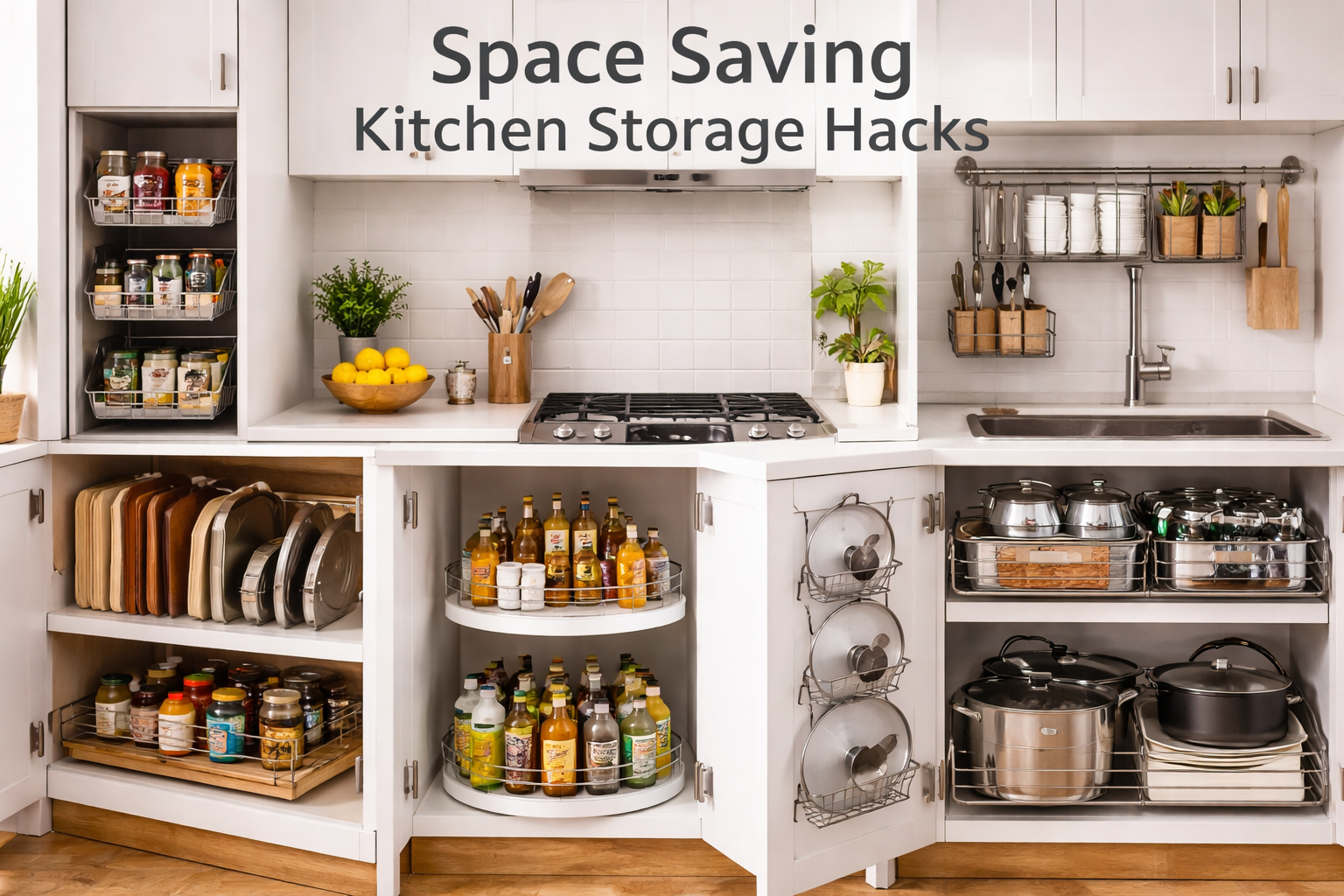
Space Saving Kitchen Storage Hacks : The kitchen is the heart of the home, but in modern dwellings, it’s often the smallest room. Apartments and houses alike increasingly feature compact kitchens that must accommodate everything needed for daily cooking—pots, pans, utensils, ingredients, appliances, dishes, glassware, and often a surprising amount of stuff that simply accumulates because kitchens are where stuff tends to gather.
The challenge of small kitchen storage is universal, but so are the solutions. Across cultures and centuries, cooks have developed ingenious ways to maximize limited space, using every nook and cranny, every vertical surface, every hidden corner. These are not expensive renovations or custom cabinetry—they are clever hacks that anyone can implement, often for very little money.
The ideas that follow draw on the collective wisdom of small-space dwellers who have faced the challenge of too much stuff and too little space. From magnetic solutions that utilize wall space to tension rods that create instant organization, from repurposed household items to clever commercial products, these hacks will help you store more in less space without sacrificing accessibility or style.
Read More : How to Declutter Your Kitchen Fast
Vertical Storage Ideas for Small Kitchen Spaces
Simple Pantry Organization Tips for Families
1. Magnetic Magic: Using Walls for Metal Items
Magnets offer some of the most versatile space-saving solutions for kitchens. They utilize wall space that would otherwise go unused, keeping frequently used items accessible while freeing up drawer and counter space .
Magnetic knife strips are the classic magnetic solution. Mounted on the wall or backsplash, they keep knives safely accessible while freeing up drawer space. Unlike knife blocks, magnetic strips don’t trap bacteria and allow you to see all your knives at once. Choose strips with strong magnets that will securely hold even heavy knives .
For spice storage, magnetic spice tins attach directly to the refrigerator or any metal surface. These small tins with magnetic backs keep spices visible and accessible while freeing up cabinet space. Label the tops so you can identify spices at a glance .
Magnetic strips can also hold metal utensils. Mount a strip near the stove to keep spatulas, ladles, and spoons within easy reach while cooking. This is particularly useful in small kitchens where drawer space is limited and you want cooking tools immediately accessible .
Magnetic hooks can hold lightweight items like pot holders, oven mitts, or measuring cups. Attach them to the side of metal cabinets or the refrigerator for instant, accessible storage .
For a truly creative solution, consider a magnetic board mounted on the wall. Use it with magnetic containers to store small items like tea, spices, or baking supplies. The board becomes both storage and decor, especially if you choose an attractive container system .
2. Tension Rod Wonders: No-Tool Instant Organization
Tension rods, those spring-loaded bars originally designed for curtains, are perhaps the most versatile no-tool storage solution for kitchens. Their beauty lies in their simplicity—they require no drilling, no permanent installation, yet they create instant storage in spaces that would otherwise go unused .
Use tension rods vertically inside cabinets to create dividers for baking sheets, cutting boards, and trays. Place a rod at each end of the cabinet, and slide your sheets between them. This keeps everything upright and accessible, preventing the chaotic slide that happens when these items are stacked horizontally .
Install tension rods horizontally under the sink to hang spray bottles from their triggers. This lifts them off the cabinet floor, freeing up space for other items and keeping the bottles accessible. The rods can be positioned at whatever height works for your bottles .
In deep cabinets, tension rods placed horizontally near the back can prevent items from sliding too far back and getting lost. They act as a barrier, keeping items within reach while still allowing you to use the full depth of the shelf .
For storing pot lids, tension rods placed vertically in a cabinet can create a lid rack. Slide lids between the rods, and they’ll stay upright and organized. Multiple rods can create compartments for different sizes .
Under the sink, tension rods can also hold cleaning cloths, dish towels, or scrub brushes. Simply drape items over the rod, and they’ll dry while staying accessible. This is particularly useful in kitchens with limited drawer space .
3. Vertical Dividers: Taming Baking Sheets and Cutting Boards
Baking sheets, cutting boards, and trays are notoriously difficult to store. Stacking them makes accessing the bottom item impossible without disturbing the entire stack. Storing them horizontally wastes valuable cabinet space. Vertical dividers solve this problem elegantly .
The simplest vertical divider solution is a commercial rack designed specifically for this purpose. These wire or wooden units sit in your cabinet and create vertical slots for sheets and boards. Measure your cabinet height carefully to ensure the rack will fit .
For a DIY solution, use tension rods as vertical dividers as described above. Place two rods at the appropriate distance, and slide your sheets between them. This is adjustable and requires no permanent installation .
For a more permanent solution, install wooden dividers in your cabinet. Cut thin plywood to size and create slots that accommodate your specific collection of sheets and boards. This requires some DIY skill but results in custom storage that uses every inch efficiently .
Consider storing cutting boards vertically as well. If you have multiple boards, vertical storage keeps them accessible and prevents the warping that can happen when heavy items are stacked on top of them .
4. Under-Shelf Baskets: Utilizing Hidden Space
Under-shelf baskets attach to the shelf above, creating storage underneath. These simple units utilize space that would otherwise be empty while keeping items visible and accessible .
In upper cabinets, under-shelf baskets can hold lightweight items like kitchen towels, pot holders, or small packages. They’re particularly useful for storing items that don’t have a logical home elsewhere .
In pantries, under-shelf baskets can hold snack items, spice packets, or small cans. They create an extra layer of storage without consuming shelf space, effectively doubling your storage capacity .
Under-shelf baskets come in various sizes and materials. Wire baskets allow you to see contents; solid baskets hide clutter. Choose based on your preferences and what you plan to store .
Installation is simple—most baskets hook over the shelf above and require no tools. Ensure the basket is securely attached and won’t fall when items are removed .
5. Over-the-Sink Innovations: Utilizing Air Space
The area above the sink is often overlooked, yet it represents valuable real estate that can be used for storage without interfering with sink function. Over-the-sink solutions take advantage of this space while keeping items within easy reach .
An over-the-sink drying rack is perhaps the most practical solution. These racks sit directly over the sink, allowing washed dishes to drip dry without taking up counter space. When not in use, many models fold flat or roll up, disappearing until needed .
Over-the-sink cutting boards provide additional workspace in kitchens where counter space is limited. These boards sit securely over the sink, creating a stable surface for food preparation. When you’re done, simply remove the board and wash it in the sink below .
A hanging pot rack installed over the sink can store frequently used pots and pans. While pot racks are typically installed over islands, positioning one over the sink makes sense in a small kitchen—any drips from washed pots fall into the sink rather than onto the floor or counter .
For a temporary solution, a tension rod installed horizontally above the sink can hold cleaning brushes, scrubbers, or lightweight utensils on S-hooks. This requires no drilling and can be removed without leaving marks .
6. Door-Mounted Storage: Inside Cabinet Doors
The insides of cabinet doors represent storage territory that is almost always wasted. Yet these surfaces offer prime real estate for lightweight items that need to be accessed frequently .
The simplest door-mounted solution is an over-door rack that hangs from the top of the cabinet door. These units provide pockets for storing everything from cutting boards and baking sheets to cleaning supplies and food storage containers .
For spice storage, door-mounted racks keep spices visible and accessible while freeing up shelf space. Look for racks with rails that hold jars securely, preventing them from falling when the door opens and closes .
Adhesive hooks provide a no-drill option for lightweight items. Attach them to the inside of cabinet doors to hang measuring cups, oven mitts, kitchen towels, or small utensils .
Wire racks that attach to the inside of the door can hold foil, plastic wrap, parchment paper, and storage bags. These items come in awkward boxes that are difficult to store efficiently on shelves; door mounting keeps them accessible while using otherwise wasted space .
For under-sink cabinets, door-mounted organizers can hold cleaning supplies, sponges, and trash bags. The key is ensuring the door can still close securely—measure carefully before purchasing .
7. Rolling Carts and Islands: Mobile Storage Solutions
In a small kitchen, fixed furniture consumes space that might be needed for different purposes at different times. Rolling carts and mobile islands offer the perfect solution—they provide storage and workspace when needed, then roll out of the way when they’re not .
A rolling kitchen cart can serve multiple functions. With a butcher block top, it provides additional counter space for food preparation. With shelves or drawers, it offers storage for pots, pans, or ingredients. With a towel bar on the side, it holds kitchen towels or hanging utensils .
Look for carts with locking casters so they remain stable when in use. The wheels should be sturdy enough to roll smoothly over any transitions in your flooring. Consider the cart’s height—it should match your existing counter height if you plan to use it as additional workspace .
For extremely tight spaces, consider a narrow rolling cart designed to fit between cabinets or against a wall. These slim units can hold spices, oils, and frequently used items while occupying minimal floor space .
A rolling kitchen island provides more substantial storage and workspace. Look for units with open shelving for frequently used items, drawers for utensils, and cabinets for larger pots. Some islands include a drop-leaf extension that provides additional surface when needed and folds down when not in use .
8. Stackable Solutions: Going Vertical Within Cabinets
Within existing cabinets, vertical space is often wasted. Stackable solutions create multiple layers of storage, effectively doubling your cabinet capacity .
Stackable shelves and risers create two levels of storage within a single cabinet shelf. Place them on lower shelves to store items like mugs or small bowls on the top level, with plates or larger items below. The key is ensuring the riser is stable and that items on both levels remain accessible .
For canned goods, stackable can racks create organized storage that allows you to see everything at once. These racks tip cans forward so you can read labels, and they automatically rotate stock when you add new cans at the back .
For pot lids, stackable lid organizers keep lids separated and accessible. These units stack on top of each other, allowing you to store multiple lids in the same footprint while keeping them organized by size .
For small appliances, consider stacking when possible. Some appliances are designed to stack—a mixer with its attachments stored in the bowl, for example. For others, simply placing smaller appliances on top of larger ones can save space .
9. Corner Solutions: Wasted Space No More
Corner cabinets and corner counter spaces are notoriously difficult to use, but creative solutions can transform them into valuable storage .
For corner cabinets, a lazy susan is the classic solution. Choose a two-tier model to maximize vertical space, with shorter items on the top tier, taller on the bottom. The rotating action brings even the farthest corner items within easy reach .
For a more sophisticated solution, consider magic corner pull-out systems. These units attach to the cabinet door and pull out completely, bringing even the deepest corner contents forward. While more expensive than lazy susans, they provide superior access .
For open corner shelving, consider diagonal shelves that follow the corner angle. These custom shelves can be built to fit your specific space, creating storage for items that would otherwise be difficult to place .
For corner counter space, consider a corner carousel that sits on the counter and provides rotating storage for frequently used items like oils, spices, and condiments .
10. Repurposed Items: Creative Upcycling
Some of the best space-saving solutions come from repurposing everyday items. Look at common household objects with fresh eyes, and you’ll discover storage potential everywhere .
Magazine holders, turned on their side, make excellent storage for cutting boards, baking sheets, and trays. Mount them inside cabinet doors or place them on shelves to keep these items upright and accessible .
Shower caddies, designed for the bathroom, work surprisingly well in kitchens. Use them to store cleaning supplies under the sink, or mount them on the wall to hold utensils and cooking tools .
Drawer organizers designed for silverware can be repurposed for kitchen tools. Use them in junk drawers to corral small items, or in gadget drawers to keep specialty tools separated .
Clear shoe boxes make excellent storage for pantry items. They stack neatly, allow you to see contents, and keep similar items together. Label them for easy identification .
Muffin tins can organize small items within drawers. Use them to hold spice packets, tea bags, or small tools. The individual cups prevent items from mixing and make everything visible .
11. Appliance Garage: Hiding Without Sacrificing Access
Small appliances present a particular challenge. They’re needed regularly but take up valuable counter space. An appliance garage solves this problem by providing accessible storage that keeps appliances hidden when not in use .
An appliance garage is essentially a cabinet with a roll-top door that sits on the counter. Inside, you store frequently used appliances—toaster, coffee maker, blender—keeping them accessible but out of sight. When you need them, simply roll up the door and use them on the spot .
For a DIY version, consider a cabinet with a lift-up door. Install a shelf at counter height, and store appliances underneath. When you need an appliance, lift the door and pull it forward .
For a budget option, use a decorative screen or curtain to hide appliances on open shelving. This provides the visual calm of hiding appliances without the expense of custom cabinetry .
When deciding which appliances earn garage space, consider frequency of use. Daily appliances deserve the most accessible spots. Weekly appliances can live in less convenient garages. Monthly appliances should be stored in cabinets, not on the counter .
12. Wall-Mounted Rails and Hooks: The Restaurant Solution
Commercial kitchens have long used wall-mounted rails and hooks to keep tools accessible without consuming workspace. This solution works equally well in home kitchens .
Install a rail along your backsplash or on an empty wall. Choose a length that fits your space and style—stainless steel for modern kitchens, brass for traditional, black for industrial .
Add hooks to the rail for hanging utensils, pot holders, and small tools. S-hooks allow you to easily rearrange as needed. This keeps frequently used items within reach while freeing up drawer space .
For heavier items like pots and pans, use stronger hooks designed to bear weight. Hang pots from the rail for both storage and display—they become part of your kitchen’s decor .
For a cohesive look, choose hooks and rails in the same finish as your cabinet hardware. This ties the kitchen together visually while adding functional storage .
| Storage Hack | Best For | Cost | DIY Difficulty | Space Utilized |
|---|---|---|---|---|
| Magnetic Strips | Knives, metal utensils, spice tins | $ | Easy | Wall space |
| Tension Rods | Baking sheets, spray bottles, pot lids | $ | Very Easy | Inside cabinets, under sink |
| Vertical Dividers | Baking sheets, cutting boards | $-$$ | Moderate | Inside cabinets |
| Under-Shelf Baskets | Lightweight items, towels, packets | $ | Easy | Under shelves |
| Over-Sink Racks | Drying dishes, cutting boards | $-$$ | Easy | Air space above sink |
| Door-Mounted Storage | Spices, cleaning supplies, wraps | $ | Easy | Inside cabinet doors |
| Rolling Carts | Extra storage, additional workspace | $$-$$$ | Assembly only | Floor space |
| Stackable Solutions | Cans, lids, small items | $ | Easy | Vertical cabinet space |
| Corner Solutions | Corner cabinets, corner counters | $$-$$$ | Moderate to Difficult | Corner spaces |
| Repurposed Items | Various | Free-$ | Varies | Depends on item |
| Appliance Garage | Small appliances | $$-$$$ | Moderate | Counter space |
| Wall-Mounted Rails | Utensils, pots, towels | $-$$ | Moderate | Wall space |
The Philosophy of Space-Saving
Space-saving storage is about more than just fitting more stuff into less space. It’s about creating a kitchen that works efficiently, that makes cooking a pleasure rather than a frustration. When every item has a logical home, when everything is accessible without digging, when counter space is clear for actual food preparation—that’s when a small kitchen becomes a joy to use .
The best space-saving solutions are those that work with your actual habits, not against them. Pay attention to how you move through your kitchen. Which items do you reach for most frequently? They deserve the most accessible spots. Which tasks require the most counter space? Keep that area clear .
Remember that space-saving doesn’t mean cramming every inch full. Empty space is valuable too—it provides breathing room, makes items easier to access, and prevents the feeling of being overwhelmed. The goal is balance: enough storage for what you need, but not so much that the kitchen feels packed .
Implementing Hacks Strategically
With so many possible hacks, it’s tempting to try them all at once. A more strategic approach yields better results. Start by identifying your biggest storage pain points. Is it the chaotic baking sheet cabinet? The cluttered under-sink area? The counter covered with appliances ?
Choose one or two hacks that address these specific problems. Implement them fully and live with the changes for a while. Notice what works and what doesn’t. Adjust as needed before moving on to the next project .
As you implement each hack, consider whether it truly saves space or simply rearranges clutter. The goal is not to fill every available surface but to create a system where everything has a logical home and is accessible when needed .
Conclusion : Space Saving Kitchen Storage Hacks
A small kitchen need not be a frustrating kitchen. With creativity and strategic thinking, even the tiniest space can become a model of efficiency. The hacks presented here—from magnetic strips and tension rods to rolling carts and wall-mounted rails—provide a toolkit for maximizing every inch of your kitchen without expensive renovations .
The beauty of these solutions is that most are inexpensive, require no permanent installation, and can be adjusted as your needs change. They’re perfect for renters who can’t modify their kitchens permanently, and for homeowners who want to test solutions before committing to more expensive renovations .
Start with what bothers you most. Choose one hack that addresses that frustration and implement it. Experience the satisfaction of a small improvement, then build from there. Gradually, your kitchen will transform from a source of frustration into a space of possibility—a place where everything has a home, where cooking is a pleasure, where creativity flourishes within constraints .
The most ingenious space-saving solutions often come from looking at familiar spaces with fresh eyes. That gap between refrigerator and wall could hold a slim cart. The inside of that cabinet door could store spices. The wall beside the stove could become a magnetic strip for knives. Every inch of your kitchen has potential; it’s simply a matter of seeing it .